The Coral Reef That Learned to Talk Back: A team of marine scientists gave AI a voice underwater, and what they built is changing how we protect the ocean
Somewhere beneath the surface of the Pacific, a hydrophone is listening. What it hears is being turned into something that might just save an ecosystem. It is a genuinely good news story, and it starts with a problem that will feel familiar to anyone who runs a business on data they can barely manage.
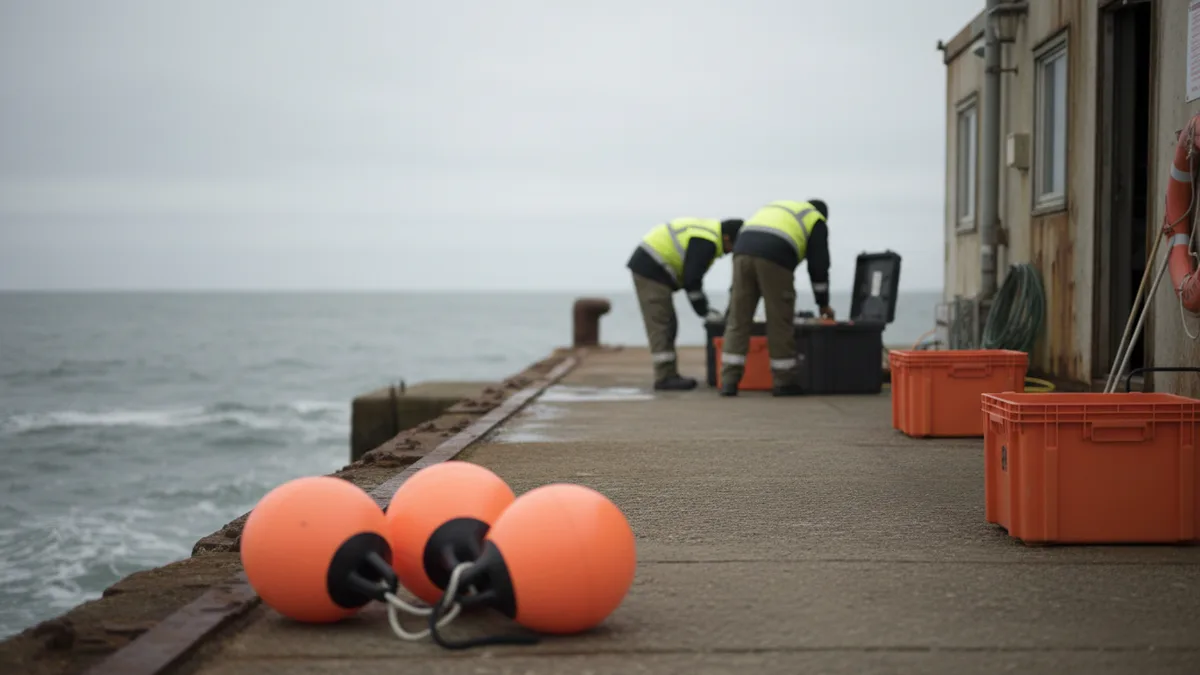
There is a reef system in the Pacific that nobody can watch all the time. It stretches across hundreds of kilometres, it changes daily, and the scientists trying to protect it have always faced the same problem: too much ocean, not enough people, and data arriving faster than any team can read it. For decades the answer was to do the best you could, write up what you saw, and accept that a lot of what happened out there would go unrecorded.
That changed a few years ago when a small research group started dropping hydrophones into the water and asking an AI system to listen. Not to replace the scientists. Not to automate the reef. Just to listen, recognise patterns in the sound, and flag the things that mattered. The results have been, by any measure, remarkable. And the reason the story is worth telling on a Friday morning in October 2026 is not because it is exotic. It is because the underlying problem, too much data, too few people, too little time, is one that businesses in Northern Ireland deal with every single day.
What the reef actually sounds like
Healthy coral is noisy. Snapping shrimps, fish feeding, water moving through structure. A degraded reef goes quiet in specific ways. Bleaching events change the acoustic signature before a diver would notice anything visually wrong, and by the time a survey team gets in the water the window for early intervention has often closed.
The team behind the project, researchers working across institutions in Australia and the United States with field stations in the Indo-Pacific, trained an AI model on thousands of hours of underwater audio. They labelled healthy sounds, stressed sounds, the particular crackle of a bleaching event beginning. The model learned to distinguish signal from noise, and it learned to do it continuously, around the clock, across monitoring points that no human team could cover.
What they ended up with was not a dashboard full of alerts nobody reads. It was a system that listens, filters, and tells the scientists where to look and when. The scientists still make the decisions. The AI just makes sure they are making them with the right information at the right time.
Why this is harder than it sounds
The technical challenge was significant, but the harder problem was the data itself. Years of recordings sat on hard drives in different formats, labelled inconsistently, some of it barely catalogued. Sound files from one monitoring station used different naming conventions from another. Metadata was incomplete. Some recordings had been made on equipment that was later replaced, changing the audio characteristics in ways that confused early models.
That story, good data scattered across systems that do not talk to each other, recorded by people who were doing their best at the time, stored in formats that made sense then but not now, is not a marine biology problem. It is a business problem. It is the problem of the Antrim manufacturer whose maintenance records go back twenty years across three different spreadsheet formats. It is the problem of the Derry food producer whose customer specs live in email threads, PDF attachments and a shared drive that nobody has properly organised since 2019.
The reef scientists solved it by doing the unglamorous work first: standardising, cleaning, connecting. Then they built the model on top. The lesson is not about coral. It is about what becomes possible when you treat your historical data as an asset worth organising.
The restoration angle
Listening was only the first part. The same team has been working on acoustic restoration, playing recordings of healthy reef sounds through underwater speakers to attract juvenile fish and invertebrates back to recovering sections of reef. The AI system helps identify which sections are recovering and which are stalling, feeding that back into decisions about where to focus restoration effort.
It is a feedback loop: monitor, analyse, intervene, monitor again. Anyone who has ever tried to improve a production process or reduce waste in a warehouse will recognise that loop immediately. The technology is different. The logic is identical.
The results published so far are genuinely encouraging. Recovery rates in acoustically enriched sections have been measurably higher than in control areas. The scientists are careful about their claims, as scientists should be, but the direction of travel is clear. A system that was drowning in data it could not use is now using that data to make better decisions faster. That is the story.
Why this matters for Northern Ireland
Northern Ireland has a disproportionate number of businesses that are, in their own way, data-rich and insight-poor. A mid-sized food manufacturer in Cookstown might process thousands of production records a year. A wholesale distributor in Belfast might handle hundreds of supplier documents a month. A haulier running routes across the north and into the Republic is generating driver records, proof of delivery documents and compliance paperwork continuously.
The data exists. It is just not connected, not searchable, not doing any work. It sits in email inboxes, on shared drives, in the memory of the person who has been doing the job for fifteen years and is thinking about retiring. The reef scientists had the same problem with their audio files, and they solved it not by buying an expensive platform and hoping for the best, but by starting with one clear question: what do we most need to know, and what data do we already have that could answer it?
That is exactly the right question for an owner-manager in Northern Ireland to ask. Not 'how do we transform our business with AI' but 'what is the one thing we spend too long on, get wrong too often, or simply cannot see clearly enough?' Start there.
Where to start
The reef project did not begin with a grand vision. It began with a hydrophone, a hard drive and a question. The team picked one monitoring station, one type of event they wanted to detect, and built something small enough to test properly. When it worked, they extended it. When it did not, they learned why and adjusted.
For a Northern Ireland SME, the equivalent might be a single document type that takes too long to process. Or a stock report that someone builds manually every week by copying numbers between spreadsheets. Or a compliance checklist that lives in someone's head because nobody ever got round to writing it down properly.
The point is to pick something specific, something where you can measure whether the result is better, and build from there. Private AI, the kind that runs on your own systems and never sends your commercial data to a public tool, is well suited to exactly this kind of focused, incremental work. You do not need to boil the ocean. You need to solve one problem well, see what that feels like, and decide what to do next.
The bigger picture, kept in proportion
It would be easy to oversell the reef story. The ocean is still warming. Bleaching events are still happening. A hydrophone and a trained model are not going to reverse the pressures on coral ecosystems on their own. The scientists involved are the first to say so.
But the project has done something real. It has given researchers better information faster. It has helped direct limited resources to the places where they will do the most good. It has turned a data problem into a decision-making advantage. And it has demonstrated, quietly and without fuss, that AI applied to a specific, well-defined problem by people who understand that problem deeply can produce results that matter.
That is the version of AI worth believing in. Not the version that promises to change everything overnight, but the version that helps a small team do their job better with the information they already have. On a Friday in late October, that feels like something worth celebrating.
Could your business data do more than it is doing right now?
If this story sparked a thought about your own systems and the data sitting quietly inside them, Verona AI offers a free 30-minute conversation to explore what private AI, built on your own data, could do for one real process in your business. No pitch deck, just a practical chat.
Book a free consultationMore from the Verona AI blog
The Machine Stopped and Nobody Wrote It Down: What private AI can do for Northern Ireland manufacturers buried under maintenance logs, production records and engineering knowledge that walks out the door when people retire
Northern Ireland manufacturers lose hours chasing maintenance history and engineering know-how. Private AI keeps that knowledge inside the business. Here is how.

The Order Came In Right but the Picking Went Wrong: What private AI can do for Northern Ireland wholesalers and distributors buried under order data, supplier records and warehouse decisions that never quite connect
Northern Ireland wholesalers lose time and margin to disconnected order data. Private AI fixes the gaps without sending your data to a public tool.
The Spec Changed on Friday Afternoon and Nobody Told the Line: What private AI can do for Northern Ireland food producers buried under customer specs, audit trails and labelling documents that shift without warning
Northern Ireland food producers lose hours chasing spec changes and audit docs. Private AI connects your systems so the right version reaches the right person first time.