The Order Came In Right but the Picking Went Wrong: What private AI can do for Northern Ireland wholesalers and distributors buried under order data, supplier records and warehouse decisions that never quite connect
In wholesale and distribution, the margin is thin and the paperwork is thick. Most of the pain is not in the picking itself. It is in everything around it that nobody has had time to join up.
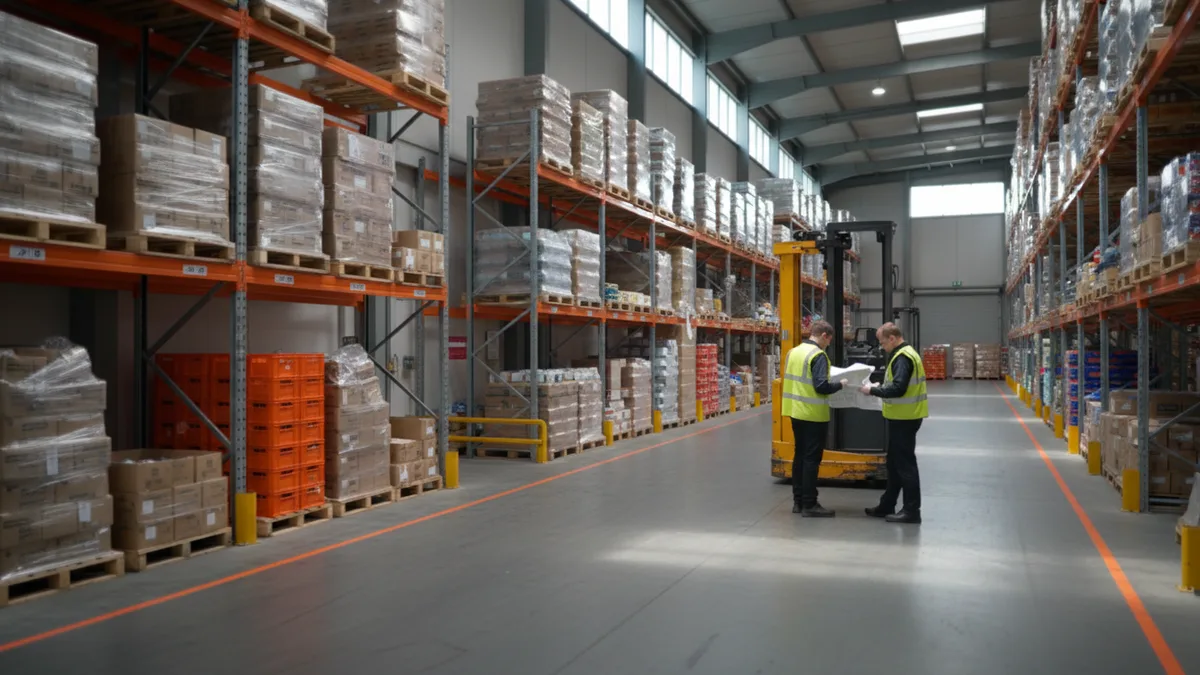
A distributor based outside Antrim town runs a warehouse of around 14,000 SKUs. Their order management system is one thing, their accounts package is another, their supplier lead-time records live in a spreadsheet updated by one person on a Thursday, and their picking instructions are printed from a system that has not spoken to the accounts package since 2019. The orders come in correctly. The invoices go out correctly, mostly. But the bit in the middle, the actual movement of stock, the decisions about what to pick, what to substitute, what to flag and what to hold, depends almost entirely on people carrying information in their heads or chasing each other across a warehouse floor.
That business is not unusual. Across Northern Ireland, in wholesale food, in builders merchants, in electrical and janitorial supply, in catering and hospitality distribution, the same pattern repeats. Multiple systems, partial data, good people compensating for gaps the software was never designed to close. The question worth asking in 2026 is not whether AI could help. It is which specific gap to close first, and how to do it without feeding your customer lists, your pricing and your supplier terms into someone else's public platform.
What the data actually looks like in a distribution business
Most distributors have more data than they realise and less visibility than they need. There are orders in the system, yes. There are invoices, delivery records, returns, credit notes, supplier confirmations and stock adjustments. There are emails from account managers at key suppliers warning of a delay. There are spreadsheets tracking slow movers. There are handwritten notes on the goods-in desk about a pallet that arrived short. None of it is connected. None of it talks to anything else in real time.
The result is that decisions get made on instinct rather than information. A buyer reorders because the bin looks low, not because the system flagged a genuine risk of stockout. A picker substitutes a line without knowing whether the customer has ever accepted that substitute before. A manager approves a credit note without being able to check quickly whether the same supplier has caused the same problem three times in the last quarter. The data to make better decisions is there. It is just scattered, and nobody has time to gather it.
Why this matters specifically for Northern Ireland
Distribution in Northern Ireland has a geography problem that businesses on the mainland do not face in quite the same way. The market is smaller, the customer base is more concentrated, and the cost of a failed delivery or a wrong pick lands harder. A wholesale food distributor serving hotels and restaurants across Belfast, Derry and the north coast cannot absorb the same margin of error as a large English regional DC with ten times the volume to spread costs across.
There is also the cross-border dimension. Distributors moving goods between Northern Ireland and the Republic, or sourcing from suppliers in Britain and the EU, are dealing with documentation requirements that have changed repeatedly since 2021 and show no sign of simplifying. Keeping on top of which products need what paperwork, which customers require what declarations, and whether a supplier certificate is still current, is a genuine administrative burden. It is exactly the kind of repeatable, document-heavy work where a private AI system earns its keep quickly.
The other factor is workforce. Finding experienced warehouse and admin staff across mid-Ulster and the north-west is genuinely hard. The businesses that manage best are not necessarily the ones paying the most. They are the ones that have stopped asking their people to compensate manually for what their systems should be doing automatically.
Where AI actually fits in a distribution operation
The most immediate wins tend to sit in three areas: order processing and exception handling, stock and demand forecasting, and document and supplier management.
On order processing, the volume of inbound orders arriving by email, EDI, phone call transcribed to email, or customer portal is manageable until it is not. When a large account sends a bulk order with fifteen line items, three of which are out of stock, one of which has been superseded and one of which has a price that does not match the agreed rate, that order needs a human decision. But it does not need a human to first spend twelve minutes finding the agreed rate, checking the supersession record and confirming current stock. A private AI system connected to the order management system, the accounts package and the stock file can surface all of that in seconds, so the person making the decision is making an actual decision rather than doing data retrieval.
On forecasting, most distributors are sitting on years of order history that their systems can technically report on but never quite turn into a useful forward view. Seasonal patterns, customer-specific buying cycles, the effect of price changes on volume, which product lines move together: all of this is in the transaction data. A forecasting model trained on that specific business's history, running privately on that business's own infrastructure, will outperform a generic industry forecast every time. It will not be perfect. But it will be better than the Thursday spreadsheet.
On documents and supplier management, this is where private AI often surprises people with how quickly it pays back. Certificates of conformity, allergen declarations, delivery terms, credit agreements, product specifications: these documents accumulate. When a customer auditor asks whether a particular supplier's allergen certificate is current, or when a buyer wants to know the lead-time clause in a supplier contract before placing an urgent order, the answer should take thirty seconds. In most distribution businesses it takes thirty minutes and three phone calls.
The private data point is not a technicality
It is worth being direct about this. A wholesale or distribution business's data is its competitive asset. Pricing structures, customer buying patterns, supplier terms, margin by line: this is the accumulated intelligence of years of trading. Feeding it into a public AI tool, even one that claims not to retain data, means it leaves the building. The risk is not always dramatic. But the principle matters, and the regulatory exposure is real.
A private AI system, installed inside the business or in a dedicated private cloud environment, means the data never goes anywhere. The AI reads it, works with it and surfaces insights from it, but it stays where it belongs. For a distributor with long-standing customer relationships and hard-won supplier agreements, that is not a minor point. It is the whole point.
There is also a practical integration argument. A private system can be connected directly to the ERP, the accounts package, the warehouse management system and the shared drive where all those supplier PDFs live. A public tool cannot do that. It sees only what you paste into it. A private system sees the whole picture, which is what makes the answers actually useful.
Where to start
The instinct for many owners is to wait until everything is ready: until the systems are cleaner, the data is tidier, the team has more capacity to manage a project. That moment rarely arrives. The better approach is to pick one process that is causing real pain right now and start there.
For most distributors, that is either order exception handling or document search. Both are well-defined, both have a clear before-and-after, and both produce results that are visible to the people doing the work within weeks rather than months. Neither requires replacing existing systems. The AI sits alongside what is already there, reads what is already there, and starts making the gaps smaller.
An AI Discovery engagement, which is a structured audit of the business's data, systems and processes, produces a costed and ranked plan. It shows which applications will pay back fastest, what integration work is involved, and what the realistic timeline looks like. It is not a strategy deck. It is a practical starting point for a business that wants to move, but wants to move in the right direction.
The margin in distribution is thin enough already. The businesses that will be in the stronger position in three years are the ones that stopped relying on people to carry information in their heads and started building systems that hold it properly.
Could your warehouse data be working harder for you?
Book a free 30-minute conversation with Verona AI and find out where private AI, built on your own data and kept entirely within your business, could make the biggest difference first.
Book a free consultationMore from the Verona AI blog
The Spec Changed on Friday Afternoon and Nobody Told the Line: What private AI can do for Northern Ireland food producers buried under customer specs, audit trails and labelling documents that shift without warning
Northern Ireland food producers lose hours chasing spec changes and audit docs. Private AI connects your systems so the right version reaches the right person first time.
The Proof of Delivery Was Sent but Nobody Can Find It: What private AI can do for Northern Ireland hauliers and transport operators buried under driver records, PODs and compliance documents that pile up faster than any back-office team can manage
Northern Ireland hauliers face a daily paper mountain of PODs, driver hours and compliance docs. Private AI connects your systems and finds answers fast.
The Pallet Left on Time but the Paperwork Did Not: What private AI can do for Northern Ireland cold chain operators buried under temperature logs, customer specs and compliance records that nobody can find at the wrong moment
Northern Ireland cold chain operators face daily battles with temperature records, compliance paperwork and customer specs. Private AI can change that fast.