The Spec Changed on Friday Afternoon and Nobody Told the Line: What private AI can do for Northern Ireland food producers buried under customer specs, audit trails and labelling documents that shift without warning
A retail customer updates their allergen spec on a Friday. By Monday morning, three departments are working from three different versions of the same document. It happens more than anyone likes to admit.
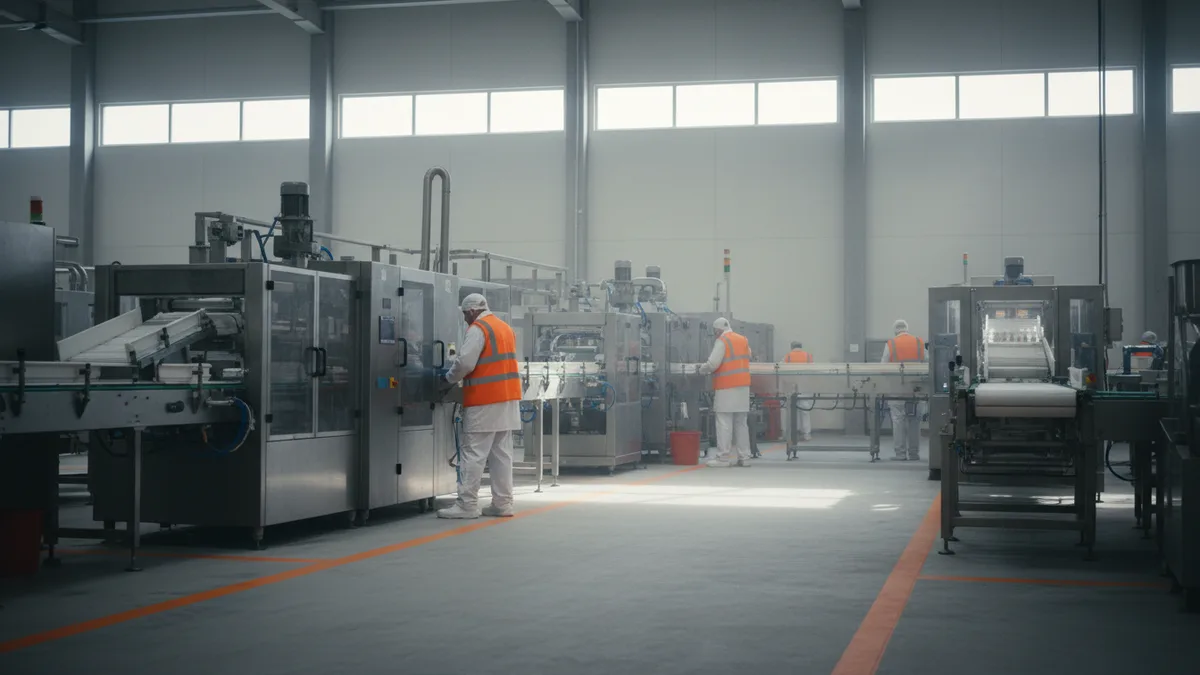
There is a particular kind of dread that settles over a food production site on a Friday afternoon. A buyer at a major retailer sends an updated product specification. Maybe the salt level has changed. Maybe a new allergen declaration is required. The email lands in one inbox, gets forwarded to another, and by the time the weekend is over the QA manager has one version, the line supervisor has a printout from six weeks ago, and the artwork file on the shared drive is something else entirely. Nobody did anything wrong. The information just never arrived at the same place at the same time in the same form.
That is not a people problem. It is a systems problem. And for Northern Ireland food and agri-food businesses, where margins are tight, retailer relationships are everything and a single labelling error can trigger a recall, it is a problem that carries real commercial weight. AI has a straightforward, practical answer to it. Not a public chatbot. Not a strategy document. A private system, sitting inside your business, connected to the documents and data you already have, making sure the right version of the truth reaches the right person before the line starts running.
What actually goes wrong and why it keeps going wrong
Talk to any QA manager at a food site in County Tyrone or County Armagh and they will describe a version of the same day. A specification arrives from a customer, often a supermarket or a foodservice buyer, and it needs to be reconciled against the current production recipe, the existing label artwork, the allergen matrix, the HACCP documentation and sometimes a supplier certificate of conformance. Each of those documents lives in a different place. Some are in an ERP system. Some are in email folders. Some are on a shared drive with a naming convention that made sense in 2019 and has since drifted into chaos. Some are on paper in a lever-arch file near the line.
The QA manager does the reconciliation manually, because that is the only way it gets done. It takes hours. And because it takes hours, it sometimes gets compressed into minutes, which is when things slip. A salt figure gets missed. An updated may-contain statement does not make it onto the next print run. The audit, when it comes, finds a gap between what the customer spec says and what the label says. The business spends the next two weeks writing corrective actions.
This is not a story about negligence. It is a story about information that moves too slowly through too many disconnected places. The fix is not more people. The fix is a system that connects those places and surfaces the right version automatically.
Why this matters specifically for Northern Ireland food businesses
Northern Ireland has a food and drink industry that punches well above its weight. From the big integrated poultry processors in mid-Ulster to the smaller artisan producers along the north coast, from the dairy co-operatives in Fermanagh to the ready-meal sites supplying GB retailers, the sector employs tens of thousands of people and generates well over a billion pounds in output. It also operates under a compliance environment that has grown steadily more demanding since the Natasha Law changes in 2021 and the ongoing adjustments that come with Northern Ireland's dual-market position under the Windsor Framework.
That dual-market position is worth pausing on. A food business in Dungannon or Ballymena may be supplying a GB retailer under one set of labelling rules, an Irish retailer under slightly different requirements, and a foodservice customer with its own house spec on top of both. Managing three sets of requirements across the same product range, with the same small back-office team, is genuinely hard. When those requirements change, which they do constantly, the margin for error is very small. A private AI system that knows your product portfolio, your customer specs and your current documentation can flag a conflict before it becomes a non-conformance.
What a private AI system actually does in a food business
The phrase AI can make food producers understandably nervous. They picture something expensive, something that needs feeding with clean data they do not have, or something that will share their recipes and formulations with a public model. None of that applies here.
What Verona builds is a system that runs inside your business, whether that is on your own servers, in a private cloud or a hybrid of both. It connects to the systems and documents you already have: your ERP or production management software, your shared drives, your email archive, your customer spec folders, your supplier certificates. It does not replace any of those systems. It reads them, indexes them and makes them searchable and comparable in a way they are not today.
On top of that foundation, specific applications get built to match specific problems. A spec management tool that automatically flags when a new customer document conflicts with your current recipe or label. A document search that lets a QA auditor find every version of a HACCP plan for a given product line in thirty seconds rather than thirty minutes. An allergen checker that cross-references a new ingredient against your existing matrix and raises an alert if something does not align. These are not grand transformations. They are targeted fixes to the problems that cost your team the most time and carry the most risk.
A realistic example from a mid-Ulster food site
Picture a cooked-meat producer near Cookstown supplying two supermarket chains and a foodservice distributor. They have around sixty active product specifications, each with its own label artwork, allergen declaration and nutritional panel. When a customer sends a spec revision, the current process involves the technical manager downloading the new document, comparing it manually against the production recipe in the ERP, checking the artwork file on the shared drive and emailing the packaging supplier if a label change is needed. On a quiet week that takes a morning. On a busy week it waits.
A private AI system connected to that business would receive the new spec document as soon as it arrives in the relevant email folder. It would automatically compare it against the current recipe and label data held in the ERP and the shared drive. If there is a discrepancy, a salt level that no longer matches or an allergen statement that needs updating, it would raise a flagged task for the technical manager with the specific differences highlighted. If there is no discrepancy, it would file the new spec against the product record and update the index. The technical manager still makes the decision. The system just does the comparison work that currently takes the morning.
That is not a hypothetical capability. It is a straightforward application of document processing and data matching, the kind of work private AI handles well. The value is not in the technology itself but in the time it returns and the errors it prevents.
Where to start if you run a food or agri-food business
The instinct for many business owners is to wait until the whole system is ready: clean data, a clear strategy, a technology team in place. That instinct tends to produce inertia. The better approach is to pick one process that is causing genuine pain and fix that first.
For most food businesses the obvious candidate is spec management and document search. The problem is concrete, the documents already exist, and the cost of getting it wrong is measurable in audit findings and corrective action reports. A focused AI Discovery audit, which is the first stage of any Verona engagement, maps exactly where that pain sits, what data is available, what connections need to be made and what the first application should look like. It produces a costed, ranked plan rather than a wish list.
The second obvious candidate is allergen and compliance documentation. Not because the team is doing it badly, but because the volume of documents involved and the speed at which customer requirements change means manual reconciliation will always carry risk. An AI system that does that reconciliation automatically, and keeps an auditable record of every check, is a genuine operational improvement rather than a nice-to-have.
The point is to start with something real, measure the result, and build from there. Food businesses in Northern Ireland do not need an AI strategy. They need one less Friday-afternoon panic.
Keeping your data where it belongs
One concern that comes up consistently in the food sector is data security. Recipes, formulations, supplier relationships and customer contract terms are commercially sensitive. The idea of feeding any of that into a public AI tool is rightly alarming. A prompt entered into a public chatbot does not stay private. It can contribute to training data that improves a model available to your competitors.
Verona's approach is built around the opposite principle. The AI system runs inside your business, on infrastructure you control. Your data does not leave your environment. It does not go to a public model. It does not train anything outside your own system. The commercial intelligence that your business has built up over years, your product knowledge, your customer specs, your supplier terms, stays yours.
For a food business in Northern Ireland, where customer relationships are hard-won and formulation detail is genuinely proprietary, that is not a minor point. It is the foundation on which the whole thing rests.
Could your specs and audit trail run themselves?
Book a free 30-minute conversation with Verona AI. We will show you how a private AI system, built on your own data and connected to the systems you already use, can take the Friday-afternoon panic out of spec changes and compliance checks.
Book a free consultationMore from the Verona AI blog
The Proof of Delivery Was Sent but Nobody Can Find It: What private AI can do for Northern Ireland hauliers and transport operators buried under driver records, PODs and compliance documents that pile up faster than any back-office team can manage
Northern Ireland hauliers face a daily paper mountain of PODs, driver hours and compliance docs. Private AI connects your systems and finds answers fast.
The Pallet Left on Time but the Paperwork Did Not: What private AI can do for Northern Ireland cold chain operators buried under temperature logs, customer specs and compliance records that nobody can find at the wrong moment
Northern Ireland cold chain operators face daily battles with temperature records, compliance paperwork and customer specs. Private AI can change that fast.
The Stock Was There on Tuesday: What private AI can do for Northern Ireland retailers and online sellers buried under supplier data, customer queries and inventory decisions that never quite add up
Northern Ireland retailers waste hours chasing stock data, answering repeat queries and second-guessing orders. Private AI fixes the root cause, not the symptom.