The Machine Stopped and Nobody Wrote It Down: What private AI can do for Northern Ireland manufacturers buried under maintenance logs, production records and engineering knowledge that walks out the door when people retire
Every manufacturer has a version of this story. A machine goes down, the engineer who knew its quirks left two years ago, and the maintenance log is a folder of handwritten sheets nobody has touched since 2019. The fix takes four hours longer than it should.
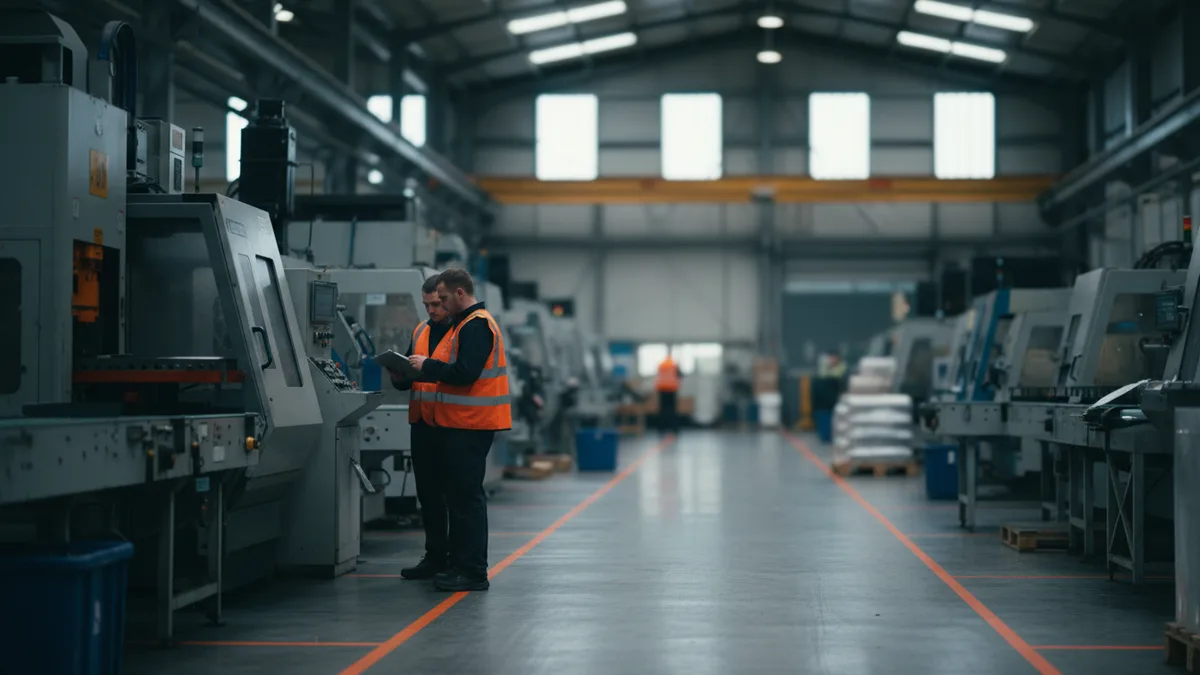
There is a particular kind of frustration that runs through manufacturing businesses of every size. It is not the frustration of not having data. It is the frustration of having enormous amounts of it, spread across a CMMS nobody fully uses, a shared drive full of PDFs, a stack of paper job cards in a lever arch file, and the heads of three people who have been on the floor for twenty years. When one of those people retires, or leaves, or is off sick for six weeks, you feel the gap immediately.
Manufacturers in Antrim, Cookstown, Newry, Ballymena and across the north have built genuinely impressive operations on tight margins and hard-won process knowledge. The problem is that the knowledge rarely lives anywhere useful. It lives in people, in paper, in spreadsheets that one person understands, and in email threads that nobody can search. When something goes wrong on the line at half seven on a Tuesday morning, the question is never whether the answer exists. The question is whether anyone can find it in time.
What the knowledge gap actually costs
Most manufacturers can point to a specific incident. A hydraulic press that took three hours to diagnose because the last person who serviced it wrote the fix on a job card that was filed, scanned badly and never indexed. A recurring quality issue on a packaging line that two different engineers investigated independently, six months apart, reaching the same conclusion both times and writing it up in two different places that neither could find. A new operator who asked the same question four times because the answer was in a document nobody knew existed.
These are not catastrophic failures. They are the steady, grinding friction that adds up across a shift, a week, a quarter. A couple of hours of downtime here, a batch of rework there, a tender that goes out with an error because the engineer was chasing information instead of checking the specification. The cost is real. It just never appears on a single line in the P and L, so it rarely gets the attention it deserves.
There is also a longer-term risk that is harder to quantify. When a skilled engineer or maintenance technician retires, they take decades of accumulated knowledge with them. The machine quirks, the supplier workarounds, the informal calibration adjustments that keep a line running smoothly. Some of it gets handed over. Most of it does not. For a lot of Northern Ireland manufacturers, that knowledge transfer problem is arriving right now, as a generation of experienced people moves toward retirement and the business has no systematic way of capturing what they know.
Why this matters for Northern Ireland specifically
Northern Ireland manufacturing is dominated by SMEs. The large plant with a dedicated reliability engineering team and a six-figure CMMS implementation is the exception, not the rule. Most manufacturers here are running lean, with multi-skilled maintenance teams, stretched production management and back-office staff who are already doing two jobs.
That context matters because the standard enterprise answer to knowledge management, which is a big ERP rollout or a company-wide digital transformation programme, simply does not fit. It is too slow, too expensive and too disruptive for a business with 40 or 80 or 150 people that needs to keep shipping product every day.
There is also a cross-border and export dimension. Many manufacturers here supply into GB, the Republic and further afield, which means they are working to multiple customer quality standards simultaneously. Keeping track of which specification applies to which product, which audit is coming up and which corrective actions are still open is a documentation and search problem as much as anything else. When that information is scattered, the cost shows up in audit preparation time, in non-conformances that could have been avoided and in the management hours spent pulling reports together that should be automatic.
What private AI actually does in a manufacturing setting
The starting point is almost always search and retrieval. A private AI system installed inside the business, connected to the maintenance records, the engineering drawings folder, the quality documents, the supplier certificates and the job card archive, can answer a question in seconds that currently takes an engineer 40 minutes to research. Not by guessing, but by reading the actual documents in the business and surfacing the relevant section.
That sounds simple. In practice it changes the texture of a working day significantly. The maintenance technician who would have spent the first hour of a breakdown hunting through a filing system instead gets a direct answer: the last three times this fault code appeared on this machine, here is what was done, here is the part number that was used and here is the name of the engineer who signed it off. The quality manager preparing for a customer audit does not spend a day assembling evidence. She asks the system what documentation exists for a particular product line and gets a structured summary with source references she can check.
Beyond search, private AI can be built to do more active work. Production data flowing from a line can be monitored for patterns that precede quality failures. Maintenance intervals can be tracked against actual usage rather than a fixed calendar. Stock of critical spares can be flagged before it runs out rather than after. These are not futuristic capabilities. They are practical applications built on the data the business already generates, connected and made usable in a way they currently are not.
The private element matters here more than it might seem. Manufacturing businesses carry commercially sensitive process knowledge. The recipe, the yield data, the supplier pricing, the quality rejection rates, the production efficiency figures. None of that should be going into a public AI tool, where the terms of service are long and the data handling is opaque. A private system runs on the business's own infrastructure, whether that is on-site, in a private cloud or a hybrid of the two. The data stays inside the business. It is not used to train anyone else's models. It does not leave the building.
Where to start
The businesses that make progress fastest are the ones that resist the temptation to solve everything at once. The right starting point is a single process where the pain is measurable and the data already exists, even if it is messy.
For most manufacturers, that is maintenance history and fault diagnosis. The data is there: job cards, CMMS exports, engineer notes, supplier service reports. It is just not connected or searchable in any useful way. Building a private AI application that makes that archive searchable and links it to live fault data is a contained, deliverable project. It produces a measurable result, typically a reduction in mean time to repair, that justifies the next step.
A second strong starting point is quality and compliance documentation. If audit preparation currently takes a team days of manual document gathering, a private AI that can search across all quality records and produce structured summaries to a given standard is a direct, quantifiable time saving. It also reduces the risk of a non-conformance caused by someone working from an outdated version of a specification.
The point is not to pick the most ambitious application. It is to pick the one where the current cost is clearest and the data is most accessible. Get one thing working well, measure it, and build from there. That is how the businesses that do this well actually do it.
The knowledge that is about to walk out the door
There is a version of this conversation that is less about efficiency and more about survival. Several manufacturers across Northern Ireland are facing a wave of retirements over the next three to five years. The people leaving are not just operators. They are the engineers and technicians who understand why the plant is configured the way it is, what was tried and abandoned in 2014, which supplier is unreliable on lead times when demand spikes and how to keep a 30-year-old piece of equipment running when the manufacturer no longer supports it.
Capturing that knowledge before it leaves is not a technology problem at its core. It is a business priority problem. But once the priority is set, AI makes the capture and retrieval far more practical than it used to be. Structured interviews, existing documentation, service records and process notes can all be ingested into a private system and made searchable in a way that a SharePoint folder or a Word document library never quite manages.
The businesses that treat this seriously now will be in a materially better position in five years than the ones that assume the knowledge transfer will happen informally, the way it always has. It rarely does.
The shape of a sensible engagement
Verona works with manufacturers in three stages. The first is an AI Discovery, a paid audit that maps where the data is, where the biggest process costs are and what a realistic first application would look like, with a costed plan rather than a vague proposal. That audit produces something useful whether or not the business goes further.
If the plan makes sense, the second stage is implementation: the private platform, the integrations to existing systems and the first working application. The third stage is ongoing managed support, monitoring, security updates and continuous improvement as the business finds new uses for the system.
Nothing in that process requires replacing existing systems. The ERP, the CMMS, the shared drives, the email archive, the spreadsheets: the AI connects to what is already there. The goal is to make what the business already knows actually usable, by the people who need it, at the moment they need it.
Want to see what this looks like for your plant?
Book a free 30-minute conversation with Verona AI. We will talk through where your maintenance, production or engineering knowledge is costing you most, and what a private AI built on your own data could realistically do about it.
Book a free consultationMore from the Verona AI blog
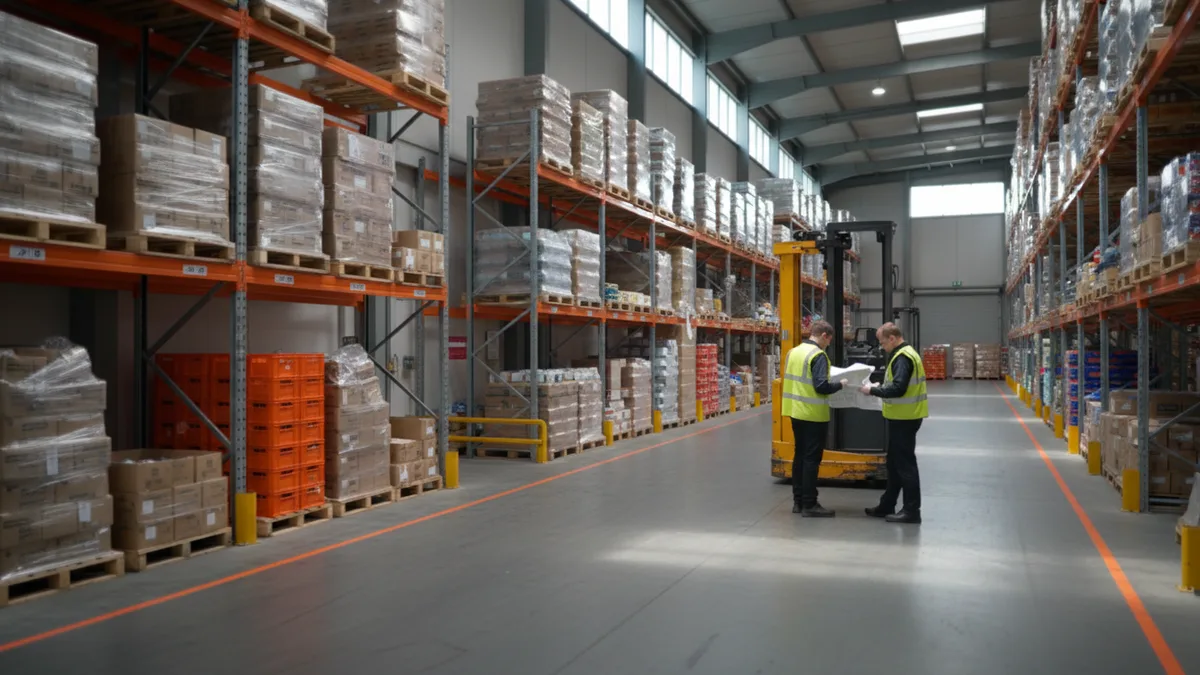
The Order Came In Right but the Picking Went Wrong: What private AI can do for Northern Ireland wholesalers and distributors buried under order data, supplier records and warehouse decisions that never quite connect
Northern Ireland wholesalers lose time and margin to disconnected order data. Private AI fixes the gaps without sending your data to a public tool.
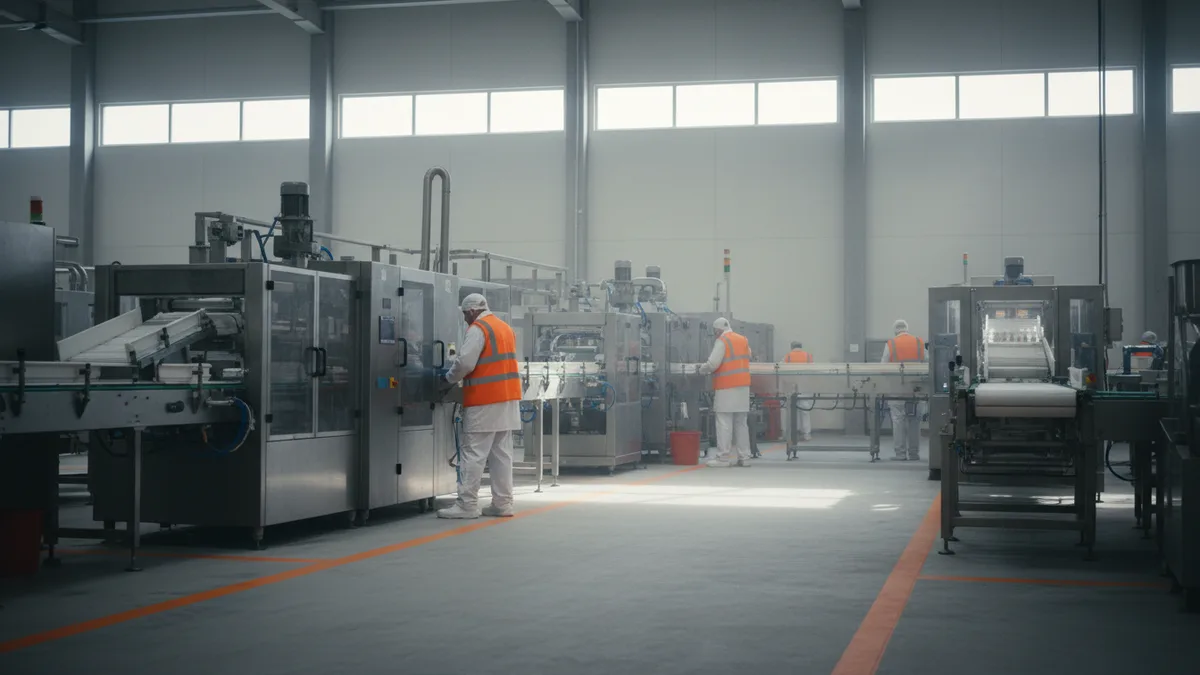
The Spec Changed on Friday Afternoon and Nobody Told the Line: What private AI can do for Northern Ireland food producers buried under customer specs, audit trails and labelling documents that shift without warning
Northern Ireland food producers lose hours chasing spec changes and audit docs. Private AI connects your systems so the right version reaches the right person first time.
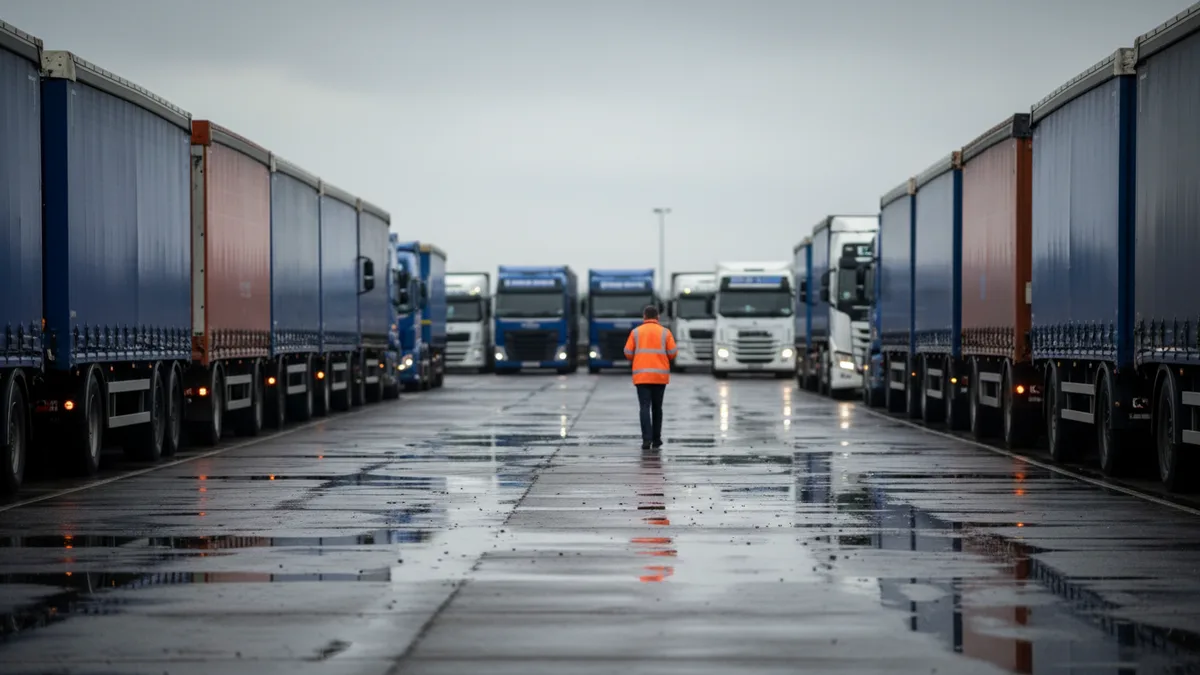
The Proof of Delivery Was Sent but Nobody Can Find It: What private AI can do for Northern Ireland hauliers and transport operators buried under driver records, PODs and compliance documents that pile up faster than any back-office team can manage
Northern Ireland hauliers face a daily paper mountain of PODs, driver hours and compliance docs. Private AI connects your systems and finds answers fast.