The Pallet Left on Time but the Paperwork Did Not: What private AI can do for Northern Ireland cold chain operators buried under temperature logs, customer specs and compliance records that nobody can find at the wrong moment
In cold chain, a missing temperature log or a misfiled customer spec can cost you a contract, a certification or a lorry load of product. The data exists. It is just nowhere useful when you need it.
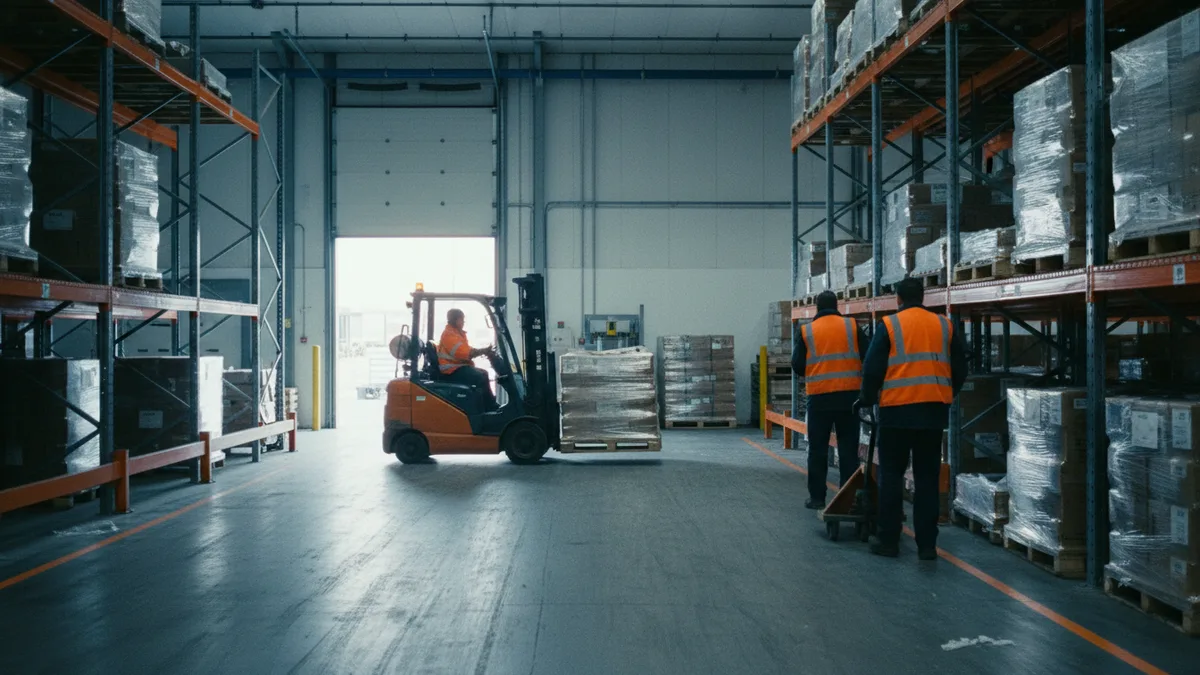
There is a particular kind of stress that arrives at half past four on a Friday afternoon in a cold store. A customer rings to say their intake team has flagged a temperature deviation on a delivery that left Mallusk or Antrim or Dungannon that morning. They want the monitoring data, the vehicle pre-check, the product specification and the despatch note, all of it, within the hour. Somewhere in your system, or your driver portal, or a shared folder nobody has properly organised since 2023, that information exists. The problem is finding it before the customer loses patience and starts talking about approved supplier lists.
This is not a technology gap in any grand sense. It is a filing and retrieval problem that compounds every single day as more records pile up across more systems. Cold chain businesses in Northern Ireland generate enormous volumes of data, temperature monitoring exports, BRC and SALSA audit trails, customer-specific handling specs, vehicle and equipment certificates, driver checklists, despatch records and delivery confirmations. Most of that data sits in formats that cannot talk to each other. Some of it is on paper. A private AI system does not fix that by replacing your processes. It sits across all of it and makes the whole lot searchable and useful, without any of it ever leaving your own environment.
What cold chain operators are actually dealing with
The cold chain in Northern Ireland is not a single industry. It runs through agri-food processing in County Tyrone and County Armagh, through chilled and frozen distribution out of Belfast and Newry, through pharmaceutical logistics, through fresh produce moving between ports at Larne and Warrenpoint and customers across the island and into Britain. The compliance demands across those segments are significant and they are not getting lighter.
Temperature monitoring alone generates a volume of records that most businesses are managing with a combination of data logger exports, spreadsheets and email attachments. When a customer or an auditor wants to see a specific vehicle on a specific date, someone has to go and find it. That someone is usually a supervisor or an operations manager, the person who should be doing something else. Multiply that across a week of queries and you start to understand where the time goes.
Customer specifications add another layer. A major retailer, a hospital trust, a school meals contractor, each one has its own handling requirements, labelling rules, temperature tolerances and delivery window expectations. Those specs change. When they change, the update arrives by email and has to be communicated to the right people before the next load goes out. If it is not, you are non-compliant before you even knew the spec had moved.
Why Northern Ireland specifically has a harder version of this problem
Northern Ireland sits in an unusual position for food and cold chain businesses. The Windsor Framework arrangements mean that goods moving between Great Britain and Northern Ireland carry additional documentary requirements that do not apply elsewhere in the UK. Chilled and frozen product moving through Larne or Belfast Harbour needs to meet checks that require records to be accessible and accurate at short notice. That is on top of the standard food safety and transport compliance obligations that apply anyway.
There is also the island dimension. Many Northern Ireland cold chain operators serve customers in the Republic of Ireland as well as Britain and local markets. That means managing compliance across different regulatory contexts simultaneously. DARD inspections, Food Standards Agency requirements, customer audits and vehicle operator licence obligations can all land in the same week. The paperwork that underpins each of those is largely the same data, just organised differently depending on who is asking for it.
The businesses doing this well are not necessarily larger or better resourced. They tend to have found ways to make their records consistent and retrievable. Private AI can do exactly that, not by creating new records but by making the records you already have work properly across all the places they currently live.
What a private AI system actually does in a cold chain business
The starting point is connecting the data sources your business already uses. Temperature monitoring exports from your data loggers or telematics platform, your transport management system or spreadsheet-based despatch records, your shared drive full of customer specs and certificates, your email archive where half the important updates from customers and suppliers actually live. A private AI platform pulls those together into a single searchable environment that sits inside your own infrastructure, not in a public cloud and not in a tool that learns from your data to serve someone else.
The first application most cold chain businesses find useful is document and record search. A customer queries a delivery. An auditor asks for evidence of temperature control on a specific product category over the past quarter. An operations manager needs to check what a customer spec says before a driver goes out. Instead of a twenty-minute hunt through folders and inboxes, someone types a plain-language question and gets the relevant records back in seconds. That alone recovers real hours across a week.
From there, the applications extend naturally. Automated compliance reports built from your own monitoring data rather than assembled by hand each time. Alerts when a customer spec has been updated and not yet acknowledged. Demand pattern analysis across your chilled lines to help with vehicle and resource planning. None of this requires a big technology programme. It starts with one process, demonstrates a clear return, and builds from there.
The data privacy point is not a footnote in cold chain
Cold chain businesses hold commercially sensitive data that goes well beyond their own operations. Customer volume patterns, delivery frequencies, product specifications, intake and rejection records. If you are serving a major retailer, a food manufacturer or a healthcare trust, that data tells a detailed story about their business. Putting it through a public AI tool means accepting that it will be processed on infrastructure you do not control, potentially retained, potentially used.
A private AI system means none of that leaves your environment. The platform runs on your own servers or a private cloud instance that belongs to you. The AI models are updated and maintained without your operational data ever being used to train anything external. For businesses that hold supplier and customer data under confidentiality obligations, that is not a nice-to-have. It is the only arrangement that is defensible if someone asks.
There is also the competitive dimension. Your routing patterns, your customer mix, your rejection rates and your pricing structure are genuinely valuable intelligence. Keeping that inside your own walls while still getting the analytical benefit of AI is exactly what private deployment is designed to do.
Where to start if you run a cold chain or chilled distribution business
The most practical starting point is almost always the compliance and record retrieval problem, because it is the one that costs visible time every week and carries real risk if it goes wrong at the wrong moment. Identifying the three or four record types that your team spends the most time hunting for, temperature logs, customer specs, vehicle certificates and despatch records are the usual candidates, gives you a clear brief for a first application.
An AI Discovery engagement with Verona looks at exactly that. It maps the data sources you have, identifies where the retrieval bottlenecks are costing you time or creating risk, and produces a costed plan that shows you what a first application would deliver and what it would cost to build. That plan is yours regardless of what you do next. There is no obligation to proceed and no vague strategy document that sits in a drawer. It is a specific, ranked set of actions tied to your actual systems and your actual data.
The businesses that get the most from this are the ones that start with a single process they can measure. Not a full digital transformation, not a platform rollout across every function at once. One process, a clear before-and-after, and then a decision about what to tackle next. In cold chain, where the margin for error on compliance is genuinely thin, that first win tends to pay for itself faster than most people expect.
Could your cold chain paperwork be working harder?
If your team is spending real time hunting for temperature logs, customer specs or compliance certificates, Verona AI offers a free 30-minute consultation to look at what a private AI system built on your own data could do for you. No public tools. No data leaving your business.
Book a free consultationMore from the Verona AI blog
The Stock Was There on Tuesday: What private AI can do for Northern Ireland retailers and online sellers buried under supplier data, customer queries and inventory decisions that never quite add up
Northern Ireland retailers waste hours chasing stock data, answering repeat queries and second-guessing orders. Private AI fixes the root cause, not the symptom.

The Hospital That Taught Itself to Listen: A small clinic in rural Bangladesh used AI to read patient records it could barely store. The ripple from that story reaches further than you might think.
A Bangladeshi rural clinic used private AI to make sense of fragmented patient records and cut missed diagnoses. A Friday story worth reading.

The Answer Is Somewhere in Last Year's Files: What private AI can do for Northern Ireland accountants, solicitors and consultancies buried under client documents, precedents and admin that never stops piling up
Northern Ireland professional services firms are drowning in documents. Private AI can search, summarise and automate without exposing client data to public tools.