The Order Came In Three Ways and None of Them Matched: What private AI can do for Northern Ireland wholesalers and distributors buried under orders, pricing queries and stock questions that arrive by phone, email and spreadsheet every single day
In wholesale and distribution, the margin is already thin. When your team spends half the day rekeying orders, chasing stock figures and answering the same pricing questions, you are losing money on every transaction twice. Once on the cost of doing it, and once on the mistakes that creep in.
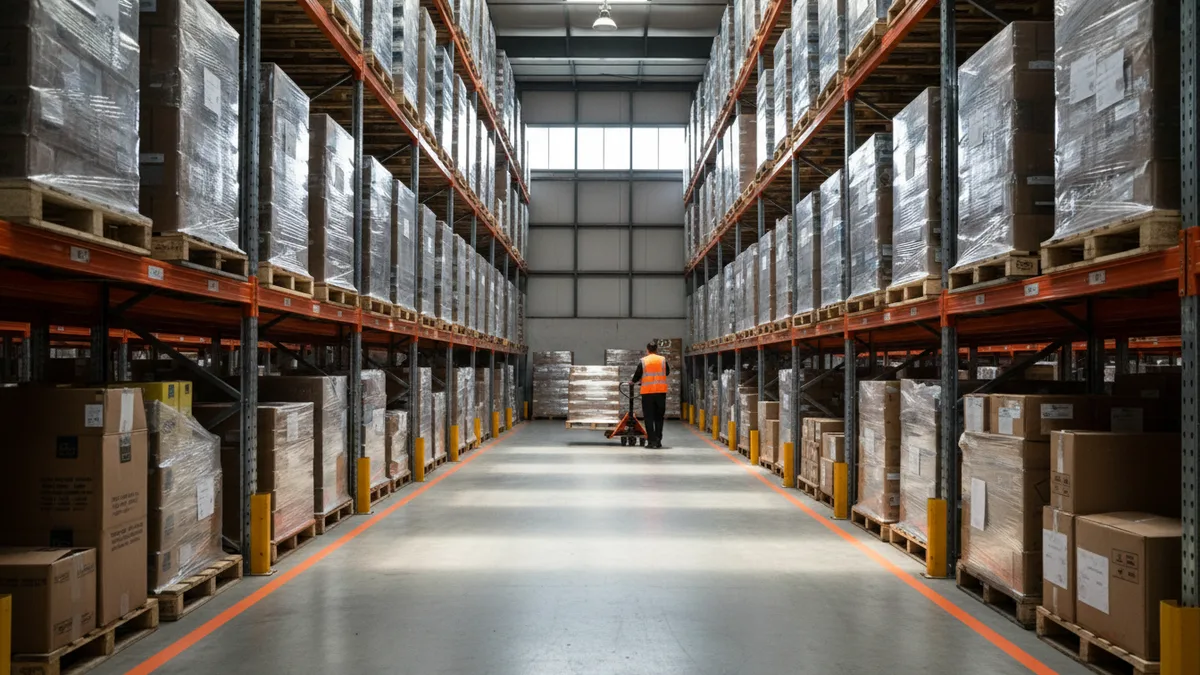
There is a wholesaler in Newry, or Antrim, or just off the Boucher Road, where the morning starts the same way every day. Someone opens their email to find fourteen orders from the night before. Six came in by email, four by phone and were written on a notepad, two arrived as attachments in formats that do not match the system, one is a WhatsApp message that got forwarded to a personal inbox, and one is a fax. Yes, still a fax. The person sitting down to deal with all of this is good at their job, probably the best person in the building at it, and they are about to spend three hours doing something a machine could handle.
That is not a technology problem in the abstract sense. It is a margin problem, a staff retention problem and a customer service problem all at once. The distributor who can turn a confirmed order into a pick note in four minutes rather than forty is not just faster. They are more accurate, they have fewer credits to raise, and their account managers are free to actually speak to customers rather than transcribe them. Private AI, installed inside the business and connected to the systems already in use, is what makes that shift possible without putting commercial data into a public tool and without replacing the people who know the customers.
The real cost of the order processing muddle
Ask most wholesale managers what their biggest operational headache is and they will say something about orders. Not the volume of orders, which is broadly a good thing, but the variety of ways they arrive and the manual effort required to turn them into something the warehouse can act on. An order that comes in by email as a PDF attachment has to be opened, read, cross-referenced against the price list, checked against current stock, keyed into the system and confirmed back to the customer. If the customer used their own product codes rather than yours, add another step. If the price has changed since the last order, add a phone call.
Multiply that by sixty or eighty orders a day across a team of three or four people and you start to understand where the hours go. The mistakes are almost inevitable. A transposed quantity here, a missed line item there, a price that was updated in the system but not on the spreadsheet the sales rep is still using. Each one generates a credit note, a conversation, and a small but real erosion of the customer relationship. The cost is not dramatic and visible. It accumulates quietly, order by order, day by day.
Why this matters particularly for Northern Ireland
Wholesale and distribution in Northern Ireland operates in a genuinely complicated environment. Many businesses here supply both sides of the border, which means managing two currency exposures, two sets of regulatory requirements and customers with different expectations about documentation and labelling. The practical reality of post-Brexit trading arrangements adds another layer of paperwork to cross-border movements that simply did not exist before 2021.
At the same time, the customer base is often a mix of independent retailers, food service businesses, construction and trade suppliers, and public sector contracts, each with their own ordering habits, pricing agreements and delivery requirements. A mid-sized distributor in Armagh or Ballymena might be managing two hundred live accounts with two hundred slightly different commercial arrangements. Holding all of that in one person's head, or across a collection of spreadsheets that are not quite in sync, is not a sustainable way to run a business as it grows.
There is also a recruitment dimension that is specific to this market. Finding experienced wholesale operations staff in Northern Ireland is not straightforward. When the people who carry the institutional knowledge of customer accounts, pricing history and supplier relationships are also the people spending their mornings rekeying orders, that knowledge is not being used well. Private AI does not replace those people. It removes the repetitive work so they can apply what they know to things that actually require judgement.
What private AI actually does in a wholesale operation
The starting point for most wholesalers is order intake. A private AI system can be connected to the inboxes, the ERP, the price lists and the stock data the business already holds. When an order arrives, by email or as an attachment, the system reads it, maps the customer's product references to the internal codes, checks the agreed pricing for that account, confirms availability against live stock, and drafts the order in the system ready for a human to review and release. What took forty minutes takes two. The human is still in the loop but they are checking rather than creating.
Beyond order processing, the same platform can handle the queries that interrupt the working day. Stock availability questions, delivery lead times, copy invoices, proof of delivery documents, account statements. A customer rings to ask whether a particular line is available and in what quantity. Today that question goes to someone who has to stop what they are doing, log into the system, find the answer and call back. With a private AI system connected to live stock data, the answer can be generated and returned in seconds, either by the system directly or by giving the person taking the call an immediate answer on their screen.
Pricing is another area where the manual workload is significant. Wholesale pricing is rarely simple. There are customer-specific agreements, volume breaks, promotional periods, and supplier cost changes that need to be passed on. Keeping price lists consistent across the ERP, the sales team's working documents and the website or portal is a constant source of errors. A private AI system that sits across all of those data sources can flag inconsistencies before they become customer-facing mistakes.
Stock and demand forecasting without a data science team
One of the more valuable things a private AI platform can do for a distributor is help with stock positioning. Not in a complicated algorithmic sense that requires a data science team to interpret, but in a practical, operational sense. The system holds the order history. It knows which lines move fastest in October, which customers tend to order ahead of public holidays, which supplier lead times have been unreliable over the past year. Combining that information into a weekly buying recommendation is not a difficult problem once the data is connected.
The businesses that manage this well carry less dead stock, hit fewer out-of-stock situations and have better conversations with suppliers because they are buying with more confidence. The businesses that manage it badly are the ones where the buyer is working from gut feel and a spreadsheet that was last updated on Thursday. Both sets of businesses often have the same underlying data. The difference is whether it is connected and accessible or scattered across systems that do not talk to each other.
A private AI platform does not magic away the complexity of demand forecasting. Lead times change, customers behave unpredictably, and a good buyer still needs to apply judgement. But it can surface the patterns in the data that a person would take weeks to find manually, and it can do it every week rather than once a quarter when someone has time to run a report.
Where to start if you run a wholesale or distribution business
The temptation with any technology project is to think about the whole operation at once. What would it look like if everything was connected and automated? That question leads to large, expensive, slow programmes that often stall before they deliver anything. The better question is: what is the one process that costs us the most time and generates the most errors right now?
For most wholesalers the answer is order intake, or pricing queries, or stock availability responses. Pick one. Verona's AI Discovery process is designed to do exactly this: audit the current process, identify where the data lives, assess what connecting it would require, and produce a costed plan for building one working application. Not a strategy deck. A plan with a number on it and a sequence of steps.
The first application goes in, runs for a few weeks, and the team can see what it actually does. From there, the next priority becomes obvious. That is how the businesses that do this well approach it. Not a transformation programme with a three-year roadmap, but a sequence of specific problems solved one at a time, each one building on the last. The commercial data stays inside the business throughout. It never goes into a public AI tool and it is never used to train a model that serves someone else's competitors.
Could one process in your business run itself by Friday?
Book a free 30-minute conversation with Verona AI. We will look at one specific bottleneck in your operation and show you what a private AI system, built on your own data, could realistically do about it.
Book a free consultationMore from the Verona AI blog
The Audit Is Tomorrow and the Records Are Everywhere: What private AI can do for Northern Ireland food producers and agri-food businesses buried under traceability paperwork, supplier documents and compliance records they can never find fast enough
Northern Ireland food producers face relentless compliance pressure. Private AI can connect your traceability records, supplier docs and audit trails in one searchable system.
The Load Is Moving but the Data Is Standing Still: What private AI can do for Northern Ireland hauliers, fleet operators and transport managers buried under driver paperwork, compliance files and margin-eating inefficiencies
Northern Ireland hauliers and fleet operators are sitting on data that could cut costs and admin. Private AI can connect it without exposing your business to public tools.
The Farmer, the Algorithm and the Field That Fought Back: A small cooperative in rural Kenya used private AI to cut crop losses by a third. Here is what that story means for the rest of us.
A Kenyan farming cooperative used AI on its own local data to cut crop losses by 34%. A Feel Good Friday story with a practical lesson for NI businesses.