The Customer Rang on a Tuesday and the Answer Was in a Filing Cabinet from 2019: What private AI can do for Northern Ireland agri-merchants and rural suppliers buried under product records, account histories and compliance paperwork that nobody can find at the right moment
Every agri-merchant and rural supplier in Northern Ireland has the same problem. The information exists. It is just spread across a filing cabinet, a spreadsheet, an inbox and someone's head, and the customer is waiting on the phone.
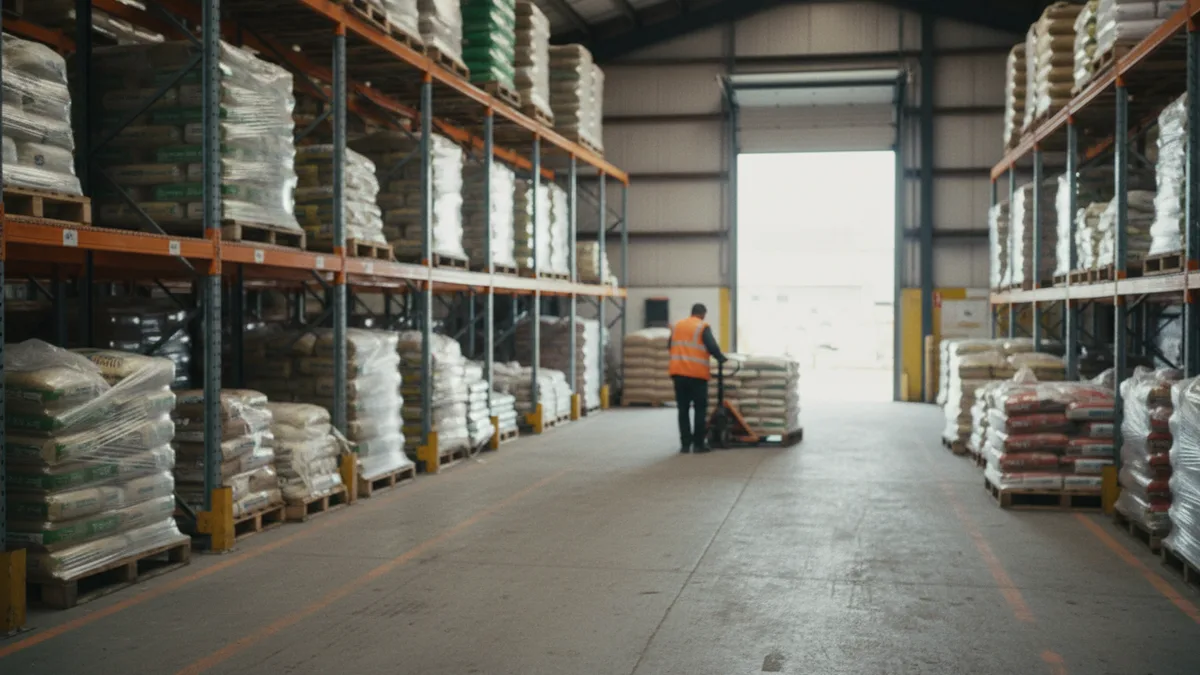
There is a merchant yard somewhere outside Ballymena, or Omagh, or Enniskillen, where the person who knows the pricing history for a particular account has been with the business for twenty-two years. They know it because they remember it, or because they have a folder on their desktop that nobody else can navigate, or because the relevant emails are in an inbox that technically belongs to someone who left in 2023. The business runs because that person turns up every morning. The question nobody wants to ask out loud is what happens when they do not.
This is not a technology problem in the way people usually mean. It is a knowledge and process problem that technology can now actually solve, without anyone having to rebuild their systems from scratch or hand their commercial data to a public platform. That last point matters more in agri-supply and rural trade than almost anywhere else, because the relationships, the pricing, the account terms and the supplier arrangements are the business. You do not want any of that sitting in a shared AI tool that learns from everyone's data.
What the day actually looks like
A customer calls to ask whether a particular product is in stock, what they paid last time, and whether there is a current promotion. Three questions that should take thirty seconds. In most agri-merchant businesses, answering all three means checking the stock system, opening the accounts package, and either remembering the promotion or hunting through an email chain. If the person who usually handles that account is out on the yard or on another call, someone else has to piece it together or call the customer back.
Multiply that by fifty calls a day and you have a significant chunk of your team's time absorbed by retrieval rather than selling or serving. The information is there. It just lives in four different places and requires a person to act as the connector every single time.
Add to that the compliance side: pesticide storage records, product data sheets, DAERA documentation, BASIS requirements if you are selling agronomy products, animal feed regulations, traceability records. Each of those has its own folder, its own update cycle and its own audit risk if something is missing or out of date. Most merchants manage it, but it is managed through effort and vigilance, not through any system that makes it easy.
Why this matters specifically for Northern Ireland
Northern Ireland's agri-supply sector sits in an unusual position. It operates across a land border, which means some businesses are managing product lines and documentation requirements that apply differently north and south. It serves a farming community that is, in many areas, geographically spread and practically demanding. Delivery windows are tight, product knowledge is expected and the relationships built over decades are the main reason customers do not simply order online.
That relationship model is a genuine competitive advantage, but it depends on the people carrying the knowledge being available and consistent. When a driver retires, when a counter sales person moves on, when an owner steps back from the day-to-day, some of that knowledge disappears or becomes inaccessible. Private AI does not replace those people. What it can do is capture what they know, connect it to the systems the business already runs, and make it available to whoever needs it next.
There is also a practical reality around the pace of regulatory change. Product approvals, label requirements and storage rules shift regularly. Keeping documentation current across a wide product range is exactly the kind of repeatable, high-stakes task where an AI system working from your own records can make a material difference to your audit readiness and your confidence when a customer or inspector asks a question.
What connecting the systems actually means
Most agri-merchants are running some combination of an accounts package, a stock or ERP system, a shared drive or file server, email, and a collection of spreadsheets that have accumulated over the years. Some have a CRM of sorts. Many have paper records for certain things, particularly older account histories or delivery dockets that were never digitised.
A private AI platform does not require you to replace any of that. It connects to what you already have, reads and indexes the content, and makes it searchable and usable through a single interface that your team can actually use without training. Ask it what a customer paid for a product in the last three orders and it pulls the answer from your accounts data. Ask it for the current product data sheet for a particular input and it finds it in your shared drive. Ask it whether a particular product has any current DAERA advisory notices and it checks your document store.
The critical word in all of that is private. The data does not go to any external AI service. It runs inside your business, on your infrastructure or in a private cloud environment that belongs to you. Your pricing, your account terms, your supplier arrangements: none of it is ever used to train a public model or visible to anyone outside your organisation.
The processes where it makes the biggest difference
Stock and demand patterns are the obvious starting point for many merchants. If your system holds two or three years of order history, an AI application can identify seasonal demand patterns product by product and flag when stock levels are likely to fall short before it becomes a problem. For a business managing several hundred SKUs across a customer base that orders in bursts around drilling, spraying and housing seasons, that kind of forward visibility has a direct effect on both service levels and working capital.
Document retrieval is quieter but probably saves more time across the week. Every time someone has to hunt for a spec sheet, a delivery record, a historical invoice or a compliance document, that is time that could be spent on something more useful. An AI search tool that understands the content of your documents, not just the file names, changes that from a five-minute hunt to a ten-second answer.
Automated reporting is the third area that tends to deliver quickly. Sales by account, by product category, by rep, by region: most of that data already exists in your systems but getting it into a readable format takes someone time every week or month. An AI application can generate those reports automatically, flag anomalies, and send summaries to whoever needs them without anyone having to build the spreadsheet again from scratch.
Where to start
The mistake most businesses make when they think about AI is trying to solve everything at once. A full digital transformation programme sounds impressive and costs accordingly, and it tends to run into the sand because nobody can agree on the scope or the priority.
The more practical approach is to pick one process that is genuinely painful, costs real time or carries real risk, and fix that first. For most agri-merchants, that is either the document and knowledge search problem or the demand and stock forecasting problem. Both are contained, both have measurable outcomes and both can be running within a few weeks of a decision being made.
Verona AI starts every engagement with a Discovery phase: a paid audit that maps the data you have, identifies the three or four processes where AI would deliver the clearest return, and produces a costed, ranked plan. There is no obligation to proceed beyond that, and the output is useful regardless of what you decide to do next. It is a way of finding out what is actually possible in your specific business before committing to anything larger.
The businesses that get the most out of AI are not the ones that launched the biggest programmes. They are the ones that picked something concrete, proved it worked and built from there. For a merchant with twenty years of account history sitting in a system that nobody can interrogate properly, that first step tends to pay for itself fairly quickly.
The knowledge that walks out the door
There is a version of this conversation that is about efficiency and a version that is about risk. Both are legitimate. The efficiency case is straightforward: faster answers, better stock decisions, less time spent on retrieval and reporting.
The risk case is the one that tends to land differently with owners who have been running a business for a long time. The knowledge that makes an agri-merchant valuable to its customers is accumulated over decades. It lives in systems, yes, but it also lives in people. When those people retire or move on, some of that knowledge goes with them unless something has been done to capture and connect it.
Private AI is one of the few practical tools that can address that problem at a business level rather than just at an individual level. Not by replacing the expertise, but by making it accessible, searchable and useful to everyone in the business, not just the person who happens to have been there longest.
Could your team find any answer in under a minute?
If the honest answer is sometimes, or it depends who you ask, it is worth a conversation. Book a free 30-minute call with Verona AI and we will show you what private AI built on your own data could look like for your business.
Book a free consultationMore from the Verona AI blog
The Variation Was Agreed but Never Recorded: What private AI can do for Northern Ireland contractors buried under drawings, contracts and site decisions that exist only in someone's memory
Northern Ireland contractors lose time and money when site decisions go unrecorded. Private AI can connect your documents, drawings and contracts in one place.

The File Was There but Nobody Could Find It in Time: What private AI can do for Northern Ireland professional services firms buried under client documents, compliance records and institutional knowledge that only one person knows how to find
Northern Ireland professional services firms lose hours every week hunting documents. Private AI fixes that without sending client data to public tools. Here is how.
The Coral Reef That Learned to Talk Back: A team of marine scientists gave AI a voice underwater, and what they built is changing how we protect the ocean
A Feel Good Friday story about AI helping marine scientists restore coral reefs, and what that spirit of practical innovation means for NI businesses.