Know What You Have, Know What You Need and Stop Losing Margin to a Warehouse That Runs on Memory and Missed Orders: Practical AI tools Northern Ireland wholesalers and distributors can put to work right now
Most wholesale and distribution businesses in Northern Ireland are sitting on years of order history, supplier data and stock records. The problem is that data is locked in systems that do not talk to each other, and decisions still get made by whoever picks up the phone first.
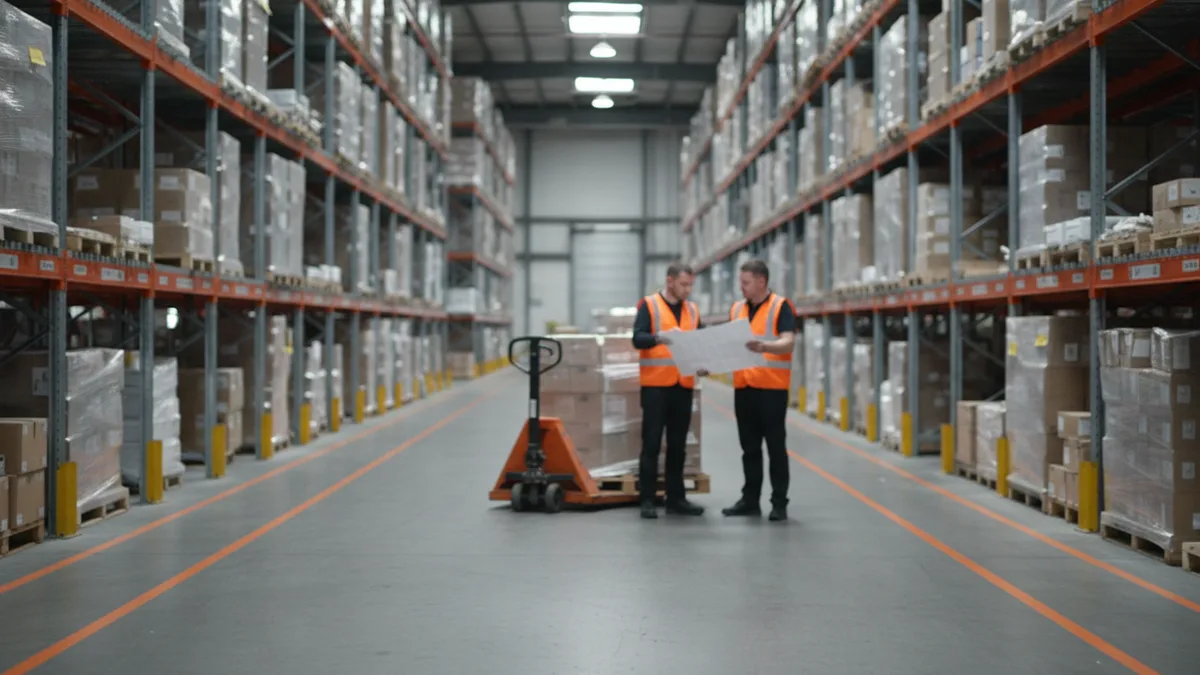
There is a wholesaler on the outskirts of Newry that processes somewhere between 400 and 600 order lines a day. The team is good, experienced and fast. But the order comes in by email, someone re-keys it into the ERP, someone else checks stock on a separate spreadsheet that was last updated on Tuesday, and the picking note gets printed and walked to the warehouse. If a customer rings to query a delivery, the answer depends on which of three people happens to be nearest the phone. That is not a failing business. That is a normal one.
The same pattern plays out in cash-and-carries in Belfast, drinks distributors in Antrim, janitorial suppliers in Derry and builders merchants across the whole of the north. The systems exist. The data exists. The problem is that none of it is connected, the knowledge lives in peoples heads, and when volume goes up or a key person takes a week off, the cracks show quickly. This is exactly the kind of operation where a private AI system, one that connects to what you already have rather than replacing it, can make a measurable difference inside a few months.
Why wholesale and distribution is harder than it looks from the outside
People outside the sector tend to think of it as straightforward: buy it, store it, sell it, ship it. Anyone who has actually run a distribution business knows the reality is a constant juggling act between supplier lead times, customer service levels, cash tied up in stock, driver availability and margin that gets squeezed from both ends.
The admin load is enormous and most of it is repetitive. Orders need processing, invoices need matching, proof of delivery needs filing, stock counts need reconciling, supplier claims need chasing. None of that work is complicated but all of it takes time, and when it goes wrong because someone misread a quantity or a document got filed in the wrong folder, the cost shows up fast. A short-shipped order to a food service customer in Armagh does not just cost the credit note. It costs the relationship.
The other hidden problem is forecasting. Most wholesalers have years of order history sitting in their ERP or accounts system, but very few are doing anything meaningful with it. Buying decisions still get made on gut feel, supplier pressure and whatever sold well last month. That means too much of the slow stuff and not enough of the fast stuff, and the working capital tied up in dead stock is rarely small.
Why this matters particularly for Northern Ireland
Northern Ireland wholesalers and distributors operate in a market with some specific pressures that make operational efficiency more important here than in many other places.
The land border and the Irish Sea arrangements mean that documentation requirements are more complex for businesses moving goods in either direction. A distributor supplying customers in both Belfast and Dublin is dealing with two regulatory environments, and the paperwork that goes with that does not sort itself. Any system that can read, classify and route trade documents automatically is not a nice-to-have in that context. It is a genuine operational need.
The customer base is also more concentrated than in larger markets. Losing one account to a competitor because your order accuracy slipped or your response times got slow can be a meaningful hit to the monthly numbers. And the talent pool for experienced logistics and operations staff is not deep. When someone who has been managing supplier relationships for eight years leaves, they take an enormous amount of knowledge with them. That knowledge needs to exist somewhere other than their head.
There is also the geography. Serving customers across Fermanagh, Tyrone, Down and the north coast from a single distribution point means route efficiency matters, and so does getting the order right first time. A re-delivery to Enniskillen because the wrong quantity was picked is an expensive afternoon.
What a private AI system actually does in a wholesale operation
The starting point for most wholesale and distribution businesses is not a grand transformation. It is fixing one expensive, repetitive process and proving that the system works before moving on.
Order processing is the most common first application. A private AI system can read incoming orders from email, PDF, EDI feeds or even photographs of faxed order forms, extract the relevant data, check it against the product catalogue and current stock levels, flag exceptions and push clean order lines into the ERP without anyone re-keying anything. That alone can save a team of three people several hours a day, and it removes the transcription errors that cause short shipments and customer complaints.
Document handling is the next obvious win. Goods-in paperwork, delivery notes, supplier invoices, returns documentation: all of it can be read, classified and filed automatically, with the relevant data extracted and matched to the right records. When a customer queries an invoice from six weeks ago, the answer is available in seconds rather than after a search through a filing cabinet or a shared drive with folders named things like 'misc 2025'.
Beyond that, the order history that sits dormant in most ERP systems becomes genuinely useful. An AI system trained on your own data can identify which lines are trending up, which customers are ordering less frequently than they used to, which products have seasonal patterns your buying team has not formally mapped, and where your stock cover is dangerously thin or wastefully deep. That kind of insight does not require a data science team. It requires connecting the data you already have to a system that can read it properly.
The private data question, and why it matters more in this sector than most people realise
Wholesale and distribution businesses handle commercially sensitive data constantly. Customer pricing is often negotiated individually and kept confidential. Supplier terms and rebate structures are not for sharing. Order volumes for a particular customer can reveal things about that customers own business that they would not want a competitor to know.
Running any of that through a public AI tool is a genuine risk. When you paste a customer order into a public chatbot to help draft a response, or upload a supplier contract to summarise it, that data leaves your building. Where it goes after that, and whether it gets used to train future models, is not always clear. For a business where relationships and pricing are the competitive advantage, that is not an acceptable trade-off.
A private AI system runs inside your own environment, whether that is on-site hardware, a private cloud instance or a hybrid of both. Your data does not go anywhere. It does not train anyone elses models. It is not visible to the AI provider or to anyone else. For a Ballymena cash-and-carry or a Lisburn food service distributor, that is not a compliance technicality. It is a basic requirement for running the business properly.
Where to start if you run a wholesale or distribution business in Northern Ireland
The right starting point is almost never the biggest or most ambitious application. It is the process that causes the most daily friction and has a clear, measurable output.
For most wholesale operations that means order processing, document handling or stock reporting. Pick the one where the cost of the current approach is most visible, whether that is staff hours, error rates, customer complaints or cash tied up in the wrong stock. A proper AI Discovery audit will map that process, identify what data and systems are involved, and produce a costed plan for what a working solution looks like and what it would realistically save.
The implementation then runs in a defined scope: the private platform goes in, the relevant integrations are built (ERP, accounts, warehouse management, email, shared drives, whatever applies), and the first application goes live. You do not need to change your ERP. You do not need to replace your warehouse system. The AI layer sits on top of what you already have and makes it work harder.
After that, the managed service keeps the system running, monitored and improving. As confidence grows, additional applications can be added: sales forecasting, supplier performance monitoring, automated reporting for the management team, compliance document generation. But none of that needs to happen on day one. The value from fixing one process properly, quickly, is enough to justify the investment on its own.
If you are running a wholesale or distribution operation in Northern Ireland and the description in this post sounds familiar, the next step is a conversation rather than a commitment. Verona AI runs a paid AI Discovery engagement that produces a clear, ranked plan with costs and expected returns. No obligation to go further until you have seen exactly what the plan looks like.
The businesses that move first will be harder to catch
Wholesale and distribution margins in Northern Ireland are not getting fatter. Fuel costs, wage inflation, customer expectations around delivery speed and order accuracy, and the ongoing complexity of cross-border trade are all pushing in the same direction. The businesses that come out of the next few years in a stronger position will be the ones that made their operations more efficient while their competitors were still re-keying orders and chasing paper.
That does not mean spending a fortune on technology or gambling on a system that might not work. It means finding the one process that costs the most, building a private AI application that fixes it on your own data, proving the return, and going from there. That is a manageable step. It is also one that compounds over time, because each application adds to the value of the platform and each piece of connected data makes the next application more powerful.
The knowledge that makes your business run, the pricing logic, the customer relationships, the supplier quirks, the seasonal patterns, that knowledge should live in your systems, not just in the heads of the people who have been there longest. Getting it out of peoples heads and into a system that can use it is not a technology project. It is a business continuity decision.
Could a private AI system change the way your warehouse runs?
Book a free 30-minute conversation with Verona AI. We will look at where your biggest process pain sits and show you what a private AI system built on your own data could realistically do about it.
Book a free consultationMore from the Verona AI blog
From Farm Gate to Shelf Life, Stop Losing Margin to a Food Business That Runs on Paperwork and Tribal Knowledge: Practical AI tools Northern Ireland food producers, processors and agri-food managers can put to work right now
Northern Ireland food and agri-food businesses are losing margin to manual paperwork and disconnected data. Here is how private AI changes that.

Build Smarter, Quote Faster and Stop Losing Margin to a Construction Business That Runs on Spreadsheets and Sticky Notes: Practical AI tools Northern Ireland builders, contractors and property managers can put to work right now
Northern Ireland contractors are losing margin to slow quoting, missed variations and paper-heavy admin. Private AI can change that without exposing your data.
Your Fleet Knows More Than You Think: What private AI can do for Northern Ireland hauliers, transport managers and logistics operators sitting on years of untapped data
Northern Ireland hauliers and logistics operators are sitting on valuable data. Private AI can turn it into better routes, fewer delays and tighter margins.