Build Smarter, Quote Faster and Stop Losing Margin to a Construction Business That Runs on Spreadsheets and Sticky Notes: Practical AI tools Northern Ireland builders, contractors and property managers can put to work right now
Most Northern Ireland construction businesses are sitting on more useful data than they realise. Job files, supplier quotes, variation logs, subcontractor records, snagging sheets. The problem is none of it talks to anything else.
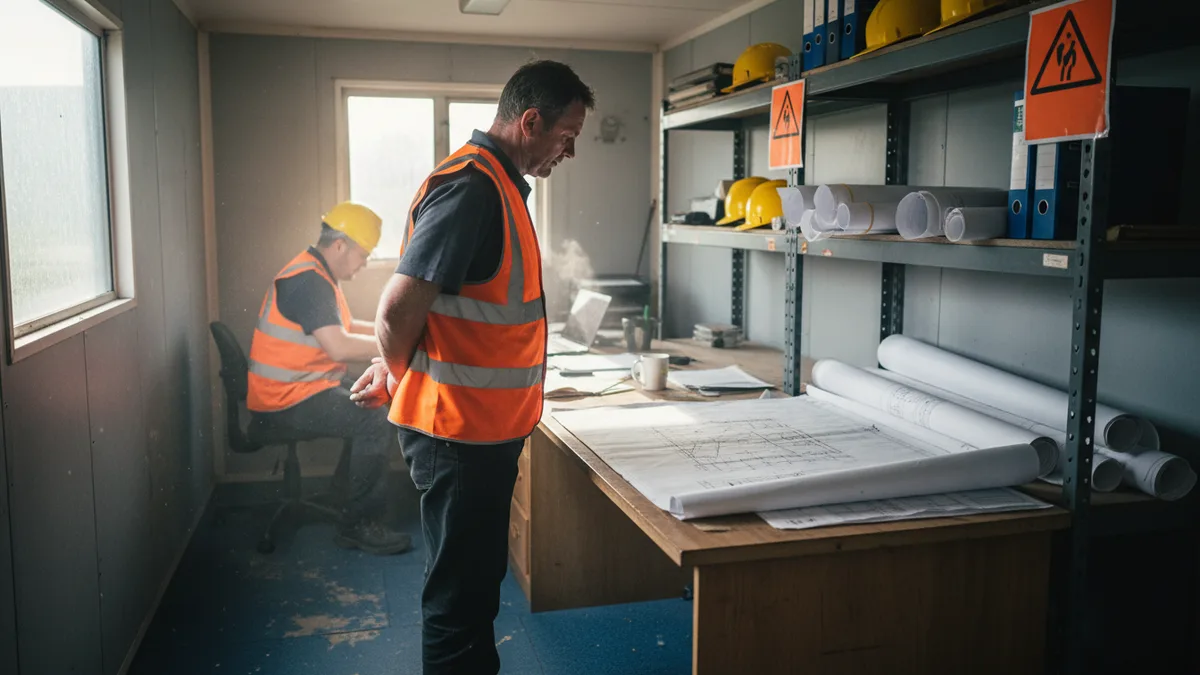
Talk to any contractor running jobs across Northern Ireland and you will hear the same frustrations. Quotes that take three days to pull together. Variation orders that slip through because nobody updated the job file. Subcontractor invoices that do not match what was agreed on site. A project manager spending Friday afternoon hunting through email threads to find out what was approved six weeks ago. None of this is caused by bad people or bad intentions. It is caused by information sitting in too many places at once, none of them connected.
The construction sector here is not short of ambition. From residential developers in Antrim and Armagh to fit-out contractors working across Belfast city centre, there is serious capability and serious competition. But the admin layer underneath most of that work is still surprisingly fragile. Decisions get made on memory. Costs get missed because the paperwork is a step behind the job. And when margins are already tight, a few missed variations or a slow quote can be the difference between a good month and a very difficult one.
Why this matters for Northern Ireland construction
The Northern Ireland construction market has its own pressures. Material costs have been volatile. The labour market for skilled trades is tight, particularly in the Derry and Strabane area and across rural counties. Planning timelines are unpredictable. And the post-Brexit trade picture has added complexity to procurement, especially for contractors sourcing specialist materials or plant from Great Britain or the Republic.
Against that backdrop, the businesses that manage their information well tend to weather the difficult periods better. They know their true job costs. They catch variations before they become disputes. They can turn around a quote in hours rather than days. That kind of operational grip is not just about efficiency. It is a commercial advantage, and it compounds over time.
Most contractors already have the raw material to do this better. Job management systems, accounting packages like Sage or Xero, shared drives full of drawings and specifications, email histories stretching back years, subcontractor records, supplier price lists, snagging logs. The data exists. The problem is that it is scattered, and nobody has time to join it up manually.
Quoting and estimating without the three-day grind
Estimating is where a lot of margin is won or lost before a job even starts. A contractor in Lisburn who can turn around an accurate, detailed quote in a day has a meaningful edge over a competitor who needs a week. But pulling together labour rates, material costs, subcontractor allowances and historical job data from previous similar projects is genuinely time-consuming when everything lives in different files.
A private AI system can change this considerably. Connected to your historical job costings, your supplier price files and your specification library, it can draft a structured estimate from a new set of drawings or a client brief in a fraction of the time. It does not replace the estimator. It does the retrieval and assembly work that currently eats the estimator's morning, so they can focus on the judgement calls that actually require experience.
The key word is private. Your pricing, your supplier relationships, your margin structures and your historical job data are commercially sensitive. They should not be going into a public AI tool where the terms of service are vague and the data handling is opaque. A system that runs inside your own environment, connected only to your own files, keeps all of that where it belongs.
Variation tracking and contract administration
Variations are where construction businesses quietly haemorrhage margin. A client asks for a change on site, the site manager agrees it verbally, somebody sends an email, and three months later nobody can find the paper trail to support the additional cost claim. This is not unusual. It is the norm on busy jobs, and it is expensive.
AI can help here in a specific, practical way. A system trained on your contract documents, your email correspondence and your site instruction logs can surface every instruction, every approval and every query related to a specific variation, on demand. Instead of a project manager spending two hours reconstructing a timeline before a dispute meeting, they ask a question and get a structured answer with the relevant documents attached.
The same logic applies to contract administration more broadly. Retention schedules, defects liability periods, insurance certificate expiry dates, subcontractor payment terms. These things matter and they are easy to miss when they are buried in a folder structure that nobody has tidied since 2022. An AI search layer across your document store does not reorganise your files. It just makes the information inside them findable, quickly.
Site and project documentation
Every construction project generates a substantial paper trail. Drawings, specifications, health and safety files, inspection records, delivery notes, snagging lists, handover packs. On a medium-sized commercial project, that can run to hundreds of documents. On a housing development with multiple phases, it is considerably more.
The practical problem is that people need to find specific information quickly, often on site, often under pressure. A site manager on a job in Newry needs to know whether the structural engineer approved a specific beam size. A contracts manager in the office needs to check whether a particular subcontractor has a current public liability certificate. Hunting through shared drives or emailing back and forth to find these things is a daily friction that adds up across a year.
A document search application built on a private AI platform can answer these questions directly. It reads the documents you already have, understands what is in them, and returns specific answers rather than a list of files to open. It works across drawings, PDFs, Word documents, emails and spreadsheets. And because it runs inside your own environment, the project files, client details and contractor records never leave your control.
Why this matters for Northern Ireland specifically
Northern Ireland has a particularly strong cluster of family-run and owner-managed construction businesses. Many of them are doing serious volumes of work, fifty to a hundred jobs a year across residential, commercial and public sector contracts, with relatively lean back-office teams. The admin burden on those teams is high, and the cost of a mistake, a missed variation, a late submission, an expired certificate, is felt immediately.
There is also a regulatory dimension that is becoming more demanding. Building safety requirements have tightened considerably since Grenfell. Procurement documentation for public sector work is more detailed. Health and safety file requirements are more rigorous. Keeping on top of all of that with a small office team and a paper-heavy system is increasingly difficult.
AI does not solve the regulatory challenge by itself. But a system that can search your compliance documents, flag expiring certificates, and check whether a new specification meets the requirements referenced in your contract is a genuine help. It reduces the chance of something falling through the gap, and it reduces the time your people spend checking rather than building.
Where to start
The most common mistake is trying to do too much at once. A construction business that decides to connect its job management system, its accounting package, its document store and its email archive in one go is taking on a significant change programme. Most businesses do not need to start there.
Pick one process that is genuinely painful and measurable. For many contractors, that is document and specification search: the daily friction of finding the right drawing or the right approval quickly. For others it is variation tracking, or pulling together the data for a monthly cost report. Start there, get it working, measure the time saved, and build from that foundation.
Verona runs an AI Discovery process for exactly this reason. It is a structured audit of the systems and data you already have, producing a costed, ranked plan that tells you where AI will deliver a clear return and in what order to go after it. No guesswork, no vague promises about transformation. Just a practical plan built around your actual business, your actual data and your actual constraints. If you want to know what that would look like for your construction or property business, the conversation starts with a free thirty minutes.
Curious what AI could do for your construction or property business?
Book a free 30-minute conversation with Verona AI. We will show you what a private AI system built on your own data and connected to your existing systems could look like in practice.
Book a free consultationMore from the Verona AI blog

Your Fleet Knows More Than You Think: What private AI can do for Northern Ireland hauliers, transport managers and logistics operators sitting on years of untapped data
Northern Ireland hauliers and logistics operators are sitting on valuable data. Private AI can turn it into better routes, fewer delays and tighter margins.

Stock Smarter, Serve Faster and Stop Losing Margin to a Shop That Runs on Gut Feel and Guesswork: Practical AI tools Northern Ireland retailers and online sellers can put to work right now
Northern Ireland retailers losing margin to stockouts, admin and manual ordering can use private AI to forecast demand, cut waste and serve customers better.
Less Paperwork, More Care and Stop Losing Time to a Practice That Runs on Folders and Phone Calls: Practical AI tools Northern Ireland GP practices, care providers and health sector managers can put to work right now
Northern Ireland care providers are drowning in admin. Private AI built on your own data can cut paperwork, speed up compliance and free staff for care.