From Farm Gate to Shelf Life, Stop Losing Margin to a Food Business That Runs on Paperwork and Tribal Knowledge: Practical AI tools Northern Ireland food producers, processors and agri-food managers can put to work right now
Northern Ireland's food and agri-food sector is world-class at making things. It is less world-class at the admin, compliance and data chaos that surrounds the making. That gap is where margin quietly disappears.
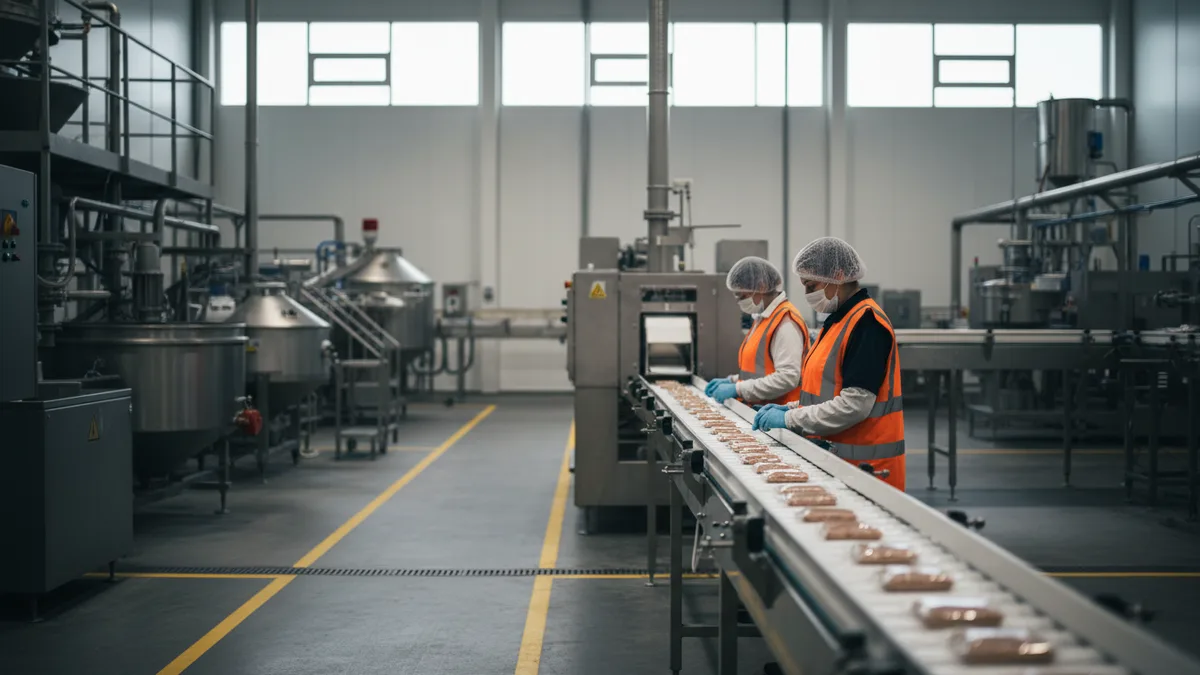
Northern Ireland's agri-food sector punches well above its weight. From the chicken processing plants around Dungannon and Ballymena to the dairy co-operatives in Fermanagh and the prepared-foods operations supplying major UK retailers from sites across Antrim and Down, this is an industry that employs roughly one in five manufacturing workers in the region and generates close to five billion pounds a year. The products are good. The people are skilled. The processes, in many businesses, are buried under a mountain of paper, spreadsheets, email threads and institutional memory that lives in the heads of people who have been doing the same job for twenty years.
That last part is not a criticism. It is just a description of how food businesses grow. You add a line, you add a compliance requirement, you add a customer with its own labelling spec, and somebody creates a new folder or a new spreadsheet to handle it. Over time, the business runs on a patchwork of systems that do not talk to each other and a handful of experienced people who know where everything is. When one of those people is off sick, or leaves, or simply cannot get to the information fast enough, the cracks show. Private AI does not fix culture or strategy. But it is genuinely good at untangling exactly this kind of operational complexity, and it does it without sending your production data, your customer specs or your supplier agreements anywhere near a public internet service.
Why this matters more for Northern Ireland food businesses than most
The dual-market position Northern Ireland occupies after Brexit creates a compliance and documentation burden that food businesses on the mainland simply do not carry. Selling into Great Britain and the Republic simultaneously means managing two sets of labelling requirements, two sets of customs and movement documentation, and in many cases two sets of retailer audit standards. A mid-sized prepared-foods company in Craigavon might be handling hundreds of product specifications, each tied to a specific customer, a specific market and a specific set of allergen and nutritional declarations. Keeping all of that current, consistent and auditable is genuinely hard work, and it is almost entirely administrative.
Add to that the traceability demands from the major multiples, the food safety audit cycles from DAERA and the FSA, and the sheer volume of incoming supplier documentation, and you have a business where a significant slice of every working week goes on paperwork that adds no product value whatsoever. That is not a complaint about regulation. It is an observation that the businesses which find ways to handle compliance faster and more accurately than their competitors will keep more of their margin and free up the people who currently do that admin to do something more useful.
The data is already there, it is just not connected
Most food processors of any size are running an ERP or production management system of some kind. They have a quality management system, or at least a folder structure that functions as one. They have supplier portals, customer spec sheets, batch records, lab results and delivery documentation. The problem is rarely a shortage of data. It is that the data sits in separate places, in separate formats, and nobody has an easy way to pull it together into a picture that helps them make a decision.
A private AI platform installed inside your own infrastructure can connect to all of those sources without any of the data leaving the building. It can read your ERP, your shared drives, your email attachments, your PDFs and your spreadsheets. It can then answer questions that currently require someone to spend an hour digging through systems: which batches used ingredient lot X, what does customer Y's spec say about shelf life labelling, when did we last fail a metal detection check on line three. These are not exotic questions. They are the questions your QA manager, your technical manager and your production supervisor ask every single day, and right now the answers take too long to find.
Compliance and audit preparation without the all-nighter
If you supply a major UK retailer, you will know the feeling of a BRC or SALSA audit looming on the calendar. Weeks of preparation, pulling together evidence, checking that procedures match what is actually happening on the floor, making sure the paperwork trail is complete. For many food businesses, audit prep is a significant cost that nobody ever properly accounts for because it is absorbed into the normal working lives of the technical and quality team.
An AI system trained on your own documents and records can do much of that groundwork continuously rather than in a pre-audit rush. It can flag gaps between your written procedures and your batch records, identify supplier approval documents that are approaching their renewal date, and generate a first draft of the corrective action log from the non-conformance records you are already keeping. The audit itself still requires human judgement and human accountability. But the preparation does not have to be a fire drill every time.
The same logic applies to DAERA inspections, customer technical questionnaires and the increasingly detailed ESG and sustainability reporting that larger customers are starting to demand from their supply chains. None of this is glamorous. All of it takes time that your technical team would rather spend on something else.
Specification management and new product development
New product development in food is a process that generates an enormous amount of documentation and then relies on everyone involved remembering where the latest version of everything lives. A retailer sends a brief. Your NPD team creates a concept. The technical team works up a specification. Procurement sources ingredients. The specification changes because an ingredient is unavailable. The label changes because the nutritional profile shifts. Six months later, when you are setting up the line for the first production run, someone needs to be confident that the spec on the system matches the label that is going on the pack.
This is precisely the kind of version-control and document-retrieval problem that AI handles well. A search tool built on your own specification library, your own supplier data and your own customer briefs will find the right version of the right document faster and more reliably than a shared drive with a folder structure that made sense in 2019 but has grown organically since. It will also surface related documents you might not have thought to look for, like a previous customer rejection that was caused by the same allergen declaration issue you are about to repeat.
Where to start in a food or agri-food business
The honest answer is: pick one process that is currently slow, error-prone or dependent on one or two people who carry the knowledge in their heads. For most food businesses, that process is one of three things. It is compliance and audit documentation. It is specification management and product data. Or it is the daily production reporting that requires someone to pull numbers from the ERP, the quality system and the line sheets and turn them into a summary that the operations director can read over breakfast.
Any one of those is a sensible starting point. You do not need to connect every system on day one. You do not need to retrain your workforce or buy new hardware. A private AI platform can be deployed against a specific, bounded problem, demonstrate measurable value in that area, and then be extended when you are ready. The businesses that get the most from AI are not the ones that launched the biggest programme. They are the ones that picked something specific, made it work, and built confidence from there.
For a food manufacturer in Omagh or a dairy processor outside Enniskillen, the value is not in some abstract digital transformation. It is in getting the audit pack ready in two days instead of two weeks, or in finding the answer to a customer technical query in ten minutes instead of two hours. Those are real savings, and they compound over time.
The data privacy point is not a footnote
It is worth being direct about this because the food sector has particular reasons to care. Your product formulations, your customer specifications, your supplier pricing and your production yields are commercially sensitive. Feeding any of that into a public AI tool, even casually and even once, creates a risk that most food business owners would not accept if they thought it through carefully.
A private AI system runs inside your own environment. The models are updated and maintained, but your data stays yours. It does not travel to a server farm in another jurisdiction. It is not used to train a model that your competitor might also be using. For a sector where customer relationships are built on trust and where a specification leak could cost you a listing, that distinction matters. It is not a marketing point. It is just the sensible way to do this.
Could your food business run leaner without adding headcount?
Book a free 30-minute conversation with Verona AI. We will look at one specific process in your operation and tell you honestly whether private AI, built on your own data, can make a measurable difference to it.
Book a free consultationMore from the Verona AI blog
Build Smarter, Quote Faster and Stop Losing Margin to a Construction Business That Runs on Spreadsheets and Sticky Notes: Practical AI tools Northern Ireland builders, contractors and property managers can put to work right now
Northern Ireland contractors are losing margin to slow quoting, missed variations and paper-heavy admin. Private AI can change that without exposing your data.
Your Fleet Knows More Than You Think: What private AI can do for Northern Ireland hauliers, transport managers and logistics operators sitting on years of untapped data
Northern Ireland hauliers and logistics operators are sitting on valuable data. Private AI can turn it into better routes, fewer delays and tighter margins.
Stock Smarter, Serve Faster and Stop Losing Margin to a Shop That Runs on Gut Feel and Guesswork: Practical AI tools Northern Ireland retailers and online sellers can put to work right now
Northern Ireland retailers losing margin to stockouts, admin and manual ordering can use private AI to forecast demand, cut waste and serve customers better.