Stock Smarter, Serve Faster and Stop Losing Margin to a Shop That Runs on Gut Feel and Guesswork: Practical AI tools Northern Ireland retailers and online sellers can put to work right now
Every retail business in Northern Ireland is sitting on data it never reads. AI built on your own stock, sales and supplier records can turn that data into decisions before the margin disappears.
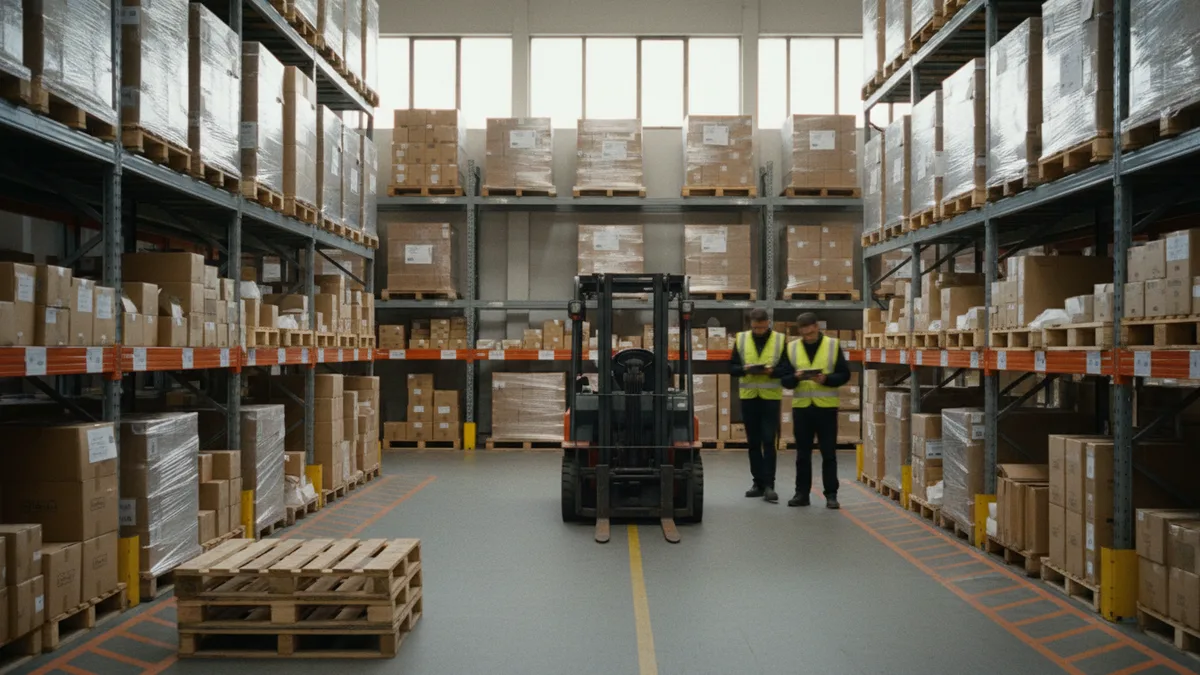
There is a particular kind of frustration that builds up in a retail business over years. You order too much of the thing that does not sell and not enough of the thing that flies off the shelf. A supplier changes a lead time and nobody updates the spreadsheet. A member of staff leaves and half the product knowledge walks out with them. You spend Sunday evening doing a report that should take twenty minutes and it takes two hours because the figures live in three different places. None of this is a management failure. It is what happens when a business grows faster than its systems.
AI gets talked about in retail as if it is something that only Tesco or Amazon can afford. That is not true any more. A private AI system installed inside your own business, connected to your EPOS, your accounts package, your supplier emails and your warehouse records, can do the same category of work for a retailer in Ballymena or Newry that the big players have been doing for years. The difference is that your data stays yours. It does not go into a public tool. It does not train somebody else's model. It works on your numbers, your margins and your customers.
Why this matters for Northern Ireland retail specifically
Northern Ireland retail operates under pressures that do not always get acknowledged in the broader UK conversation. The land border with the Republic creates a pricing dynamic that mainland retailers do not face. A family-run hardware shop in Enniskillen or a sports retailer in Omagh is competing not just with Amazon but with cross-border shopping trips and euro-denominated online stores. Margins are already tight. Getting the buying decision wrong, even once in a season, costs real money.
Post-Brexit trading arrangements have added another layer of complexity around documentation, tariff codes and supplier lead times that simply did not exist five years ago. A lot of that admin has been absorbed by owners and managers working longer hours rather than by any system. That is not sustainable, and it is exactly the kind of repeatable, document-heavy work that AI handles well.
The retail sector here also skews heavily towards family and owner-managed businesses. That means decisions get made quickly, relationships with suppliers matter, and there is rarely a dedicated data analyst on the payroll. AI does not replace that judgment. It gives you better information to make the call with.
The stock problem nobody talks about honestly
Most retail businesses have two stock problems at the same time. They are overstocked on slow lines that are tying up cash and understocked on fast lines that are losing them sales. Both problems exist in the same warehouse, often on the same day. The reason is that ordering decisions are made on habit, on supplier pressure and on what sold last year, rather than on a clear view of what is actually happening right now.
A private AI system connected to your EPOS and your purchase history can build a demand forecast at product level, not just category level. It can see that a particular line sells at three times its normal rate in the two weeks before Halloween, or that a product tied to a local building project spike in Lisburn last autumn is likely to do the same again. It can flag when a supplier's average lead time has quietly crept from four days to nine, and adjust your reorder points accordingly.
That is not magic. It is pattern recognition applied to data you already have. The reason most retailers do not do it is that pulling the data together manually takes more time than the buying team has. AI does it continuously, in the background, and surfaces the exceptions that need a human decision.
The admin that eats the working week
Stock decisions are only part of the picture. A significant slice of every retail manager's week goes on work that is repetitive, document-heavy and low-value relative to the time it takes. Supplier invoices that need to be checked against purchase orders. Customer queries about orders, returns and availability. Product descriptions and pricing that need updating across multiple channels. Reports that the owner needs every Monday morning.
AI applications built on your own data can handle all of this. Invoice matching against purchase orders, flagging discrepancies for human review rather than requiring someone to check every line manually. A customer-facing query tool that answers questions about stock availability, store hours and returns policy without a member of staff having to pick up the phone. Automated weekly reporting that pulls from your accounts and EPOS and lands in an inbox ready to read.
The time this frees up is not trivial. Across a business with five or six staff, it can easily amount to a full day a week. That is time that goes back into the floor, into buying, into the relationships with customers and suppliers that actually drive the business.
Customer insight that does not require a data team
One of the genuine advantages the big retailers have always had is the ability to analyse customer behaviour at scale. Which customers buy across multiple categories. Which ones have not come back in six months. Which product combinations tend to appear in the same basket. For a smaller retailer, that kind of analysis has traditionally required either expensive software or a person with serious spreadsheet skills and a lot of spare time.
A private AI system connected to your loyalty scheme, your EPOS and your online store can surface these patterns automatically. It can identify customers who are drifting, so you can reach out before they are gone. It can show you which product pairings are worth promoting together. It can tell you which lines are being browsed heavily online but not converting, which is often a pricing or availability signal worth acting on.
This is not about surveillance or data harvesting. It is about understanding your own customers better, using data they have already shared with you, inside a system that sits entirely within your business.
Where to start without turning the business upside down
The worst version of any technology project is the one where you try to do everything at once and end up with a system nobody uses and a bill nobody wanted. The right way to bring AI into a retail business is to start with one process that is causing real pain, where the data already exists and where a measurable improvement is achievable within a few months.
For most retailers, that starting point is either stock and demand forecasting or purchase order and invoice processing. Both involve data that is already sitting in your systems. Both have a clear before-and-after measure. Fewer stockouts, fewer overstock write-offs, fewer hours spent on manual checking. You can see the result in your margin and in your team's working week.
Verona's AI Discovery process is a paid audit that looks at your current systems, your data and your processes, and produces a ranked, costed plan for where AI will have the most impact. It is not a strategy deck. It is a practical document that tells you what to build first, what it will connect to and what it should cost. From there, implementation follows in stages, starting with the platform and the first application, then building out as the business sees results.
The data privacy question every retailer should be asking
If you have ever typed a customer query or a supplier contract into a public AI chatbot to get a quick answer, you have already shared commercial data with a model you do not control. That data can be used to train future versions of that model. For a retailer, that means customer purchasing patterns, supplier pricing, margin information and product strategies could all be sitting inside a system owned by someone else.
A private AI system from Verona runs inside your own environment, whether that is on your own hardware, in a private cloud, or a combination of the two. Nothing leaves without your knowledge. Your commercial data is not used to improve anyone else's AI. For a business where supplier relationships and pricing are genuinely competitive advantages, that matters more than it might first appear.
The businesses that will be in the strongest position in three years are not necessarily the ones that moved fastest. They are the ones that moved carefully, built on their own data and kept control of what they knew. That is a realistic goal for a Northern Ireland retailer of any size, and it does not require a transformation programme to get started.
Want to see what your own data could do?
Book a free 30-minute conversation with Verona AI. We will show you exactly how a private AI system built on your own sales, stock and supplier data could work inside your business, with no commercial data leaving your walls.
Book a free consultationMore from the Verona AI blog

Less Paperwork, More Care and Stop Losing Time to a Practice That Runs on Folders and Phone Calls: Practical AI tools Northern Ireland GP practices, care providers and health sector managers can put to work right now
Northern Ireland care providers are drowning in admin. Private AI built on your own data can cut paperwork, speed up compliance and free staff for care.

Bill Every Hour, Miss Nothing and Stop Losing Margin to a Practice That Runs on Emails and Memory: Practical AI tools Northern Ireland accountants, solicitors and consultants can put to work right now
Northern Ireland professional services firms are losing time and margin to manual admin. Private AI built on your own data can change that fast.
The Potato Field That Learned to Talk Back: A quiet AI revolution in crop disease detection is saving harvests, cutting chemical use and giving small farms a fighting chance
A Feel Good Friday look at how AI is helping farmers detect crop disease earlier than ever, and what that spirit of practical innovation means for NI businesses.