The Potato Field That Learned to Talk Back: A quiet AI revolution in crop disease detection is saving harvests, cutting chemical use and giving small farms a fighting chance
Somewhere in rural Ireland a potato crop is being saved this week, not by a specialist flying in or a expensive lab test, but by a camera on a pole and a model trained on millions of leaves. It is a small story with a big lesson.
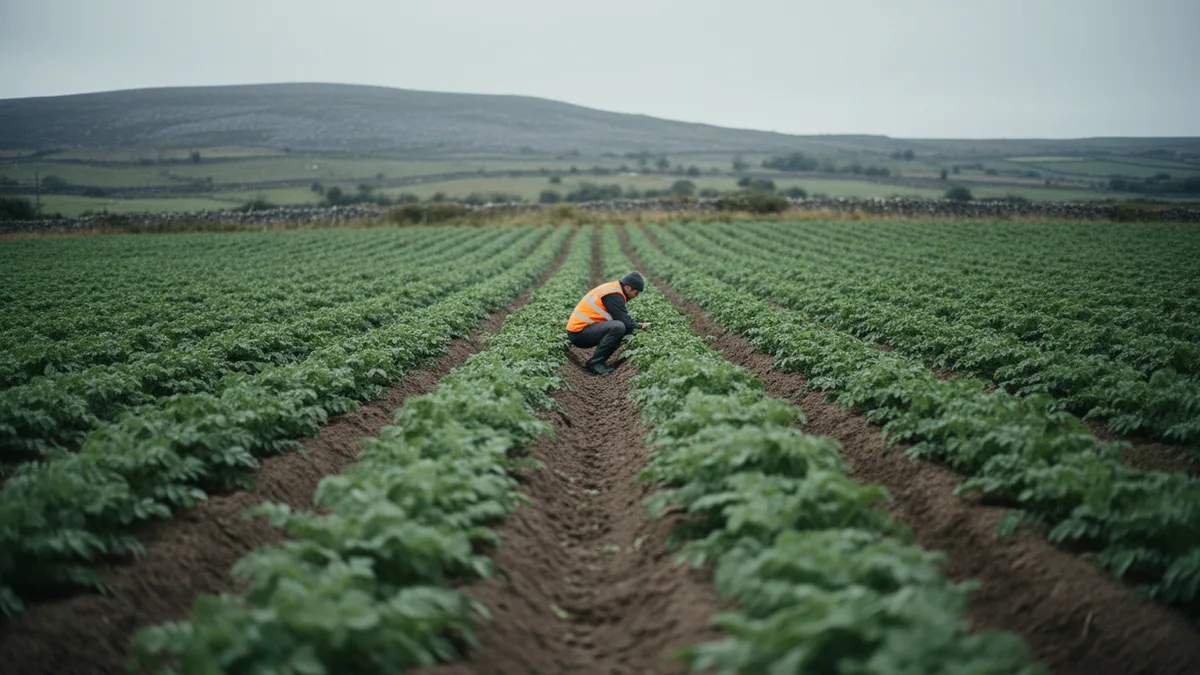
There is a particular kind of dread that comes with walking a field in late July and spotting the first brown lesion on a potato leaf. Any grower in County Down or County Tyrone will know it instantly. Late blight moves fast. By the time you can see it clearly across a full drill, you are already behind. The traditional response is to spray on a schedule and hope, or to pay for scouting that most small operations simply cannot afford on a regular basis.
A team of researchers working across Uganda, Kenya and the Netherlands has spent the last few years building something that changes that calculation. Using cameras mounted on simple poles, solar-powered edge computing units and a disease-detection model trained on over four million annotated leaf images, they have built a system that spots the early signatures of blight, bacterial wilt and mosaic virus days before a human eye would catch them. The alerts go to a farmers phone. The cost per farm per season is roughly what you would spend on a single unnecessary fungicide application. It is not a flashy product. It is a quiet, practical tool doing a specific job well. That is exactly why it is worth writing about.
What the system actually does
The setup is deliberately unglamorous. A weatherproof camera housing, a small processing unit that runs locally on the device itself, and a mobile connection that sends a daily summary rather than a constant data stream. The model runs at the edge, meaning the images never need to travel to a distant server for analysis. The farmer gets a message: block three, row twelve, early blight indicators, confidence seventy-eight percent, recommended action follows.
What makes it work is not the hardware, which is fairly standard, but the training data. The researchers partnered with agricultural extension services across three countries to build an annotated image library that reflects real field conditions: variable light, wet leaves, mixed crop varieties, soil types that look nothing like a laboratory sample. The model is specific enough to be useful and honest enough to flag its own uncertainty rather than pretending to be certain when it is not. That last point matters more than people give it credit for.
In the 2025 growing season, trials across forty smallholder farms in Uganda showed a 34 percent reduction in fungicide applications and a 19 percent improvement in marketable yield compared to a control group using conventional scouting methods. Those are not headline-grabbing numbers. They are the kind of numbers that keep a family farm viable.
Why this story landed with us this Friday
We spend most of our working week talking to business owners about process automation, document search and demand forecasting. Useful things, important things, but not always things that feel immediately uplifting on a Friday afternoon.
This story caught our attention because the underlying principle is identical to what we build for businesses here in Northern Ireland, just applied to a completely different problem. A model trained on specific, local, real-world data. Processing that happens close to the source rather than sending everything to a public cloud. Outputs that are actionable rather than merely informative. No requirement for a PhD to operate it. The technology is not magic. It is disciplined engineering applied to a problem someone actually has.
There is also something worth noting about the choice to keep the processing local. The farmers in the trial were not asked to hand over years of crop records to a public platform. Their field data stayed on their device. That is not a coincidence. The team building the system understood that trust is part of adoption, and that asking smallholder farmers in East Africa to upload their livelihoods to a server they have never heard of was never going to work. Sound familiar?
Why this matters for Northern Ireland
Northern Ireland grows a significant amount of the UK's seed potato crop. The Lough Neagh basin and the drumlin country of Armagh and Down are serious agricultural land, not hobby farms. Blight pressure here is real and annual. The same logic that works on a smallholding in Kampala applies perfectly well to a 200-acre operation outside Dungannon.
Beyond the direct agricultural parallel, the story points to something broader. The businesses we work with across manufacturing, food processing, wholesale and logistics face a version of the same challenge every single day. They have data. It is specific to them, their customers, their suppliers, their processes. That specificity is the asset. A generic public AI tool trained on the entire internet is not going to know that your particular blend of sausage seasoning has a six-week lead time from a supplier in Coleraine, or that your biggest wholesale account always places a large order the week before a bank holiday.
The farms in the Uganda trial did not benefit from a general-purpose agricultural model. They benefited from a model trained on their crops, their diseases, their conditions. That is the distinction that matters.
The pattern behind the good news
Stories like this one appear fairly regularly now, and there is a pattern worth noticing. The AI applications that are genuinely improving lives and businesses share a handful of characteristics. They are narrow. They do one thing rather than everything. They are trained on data that reflects the actual environment they operate in. They produce outputs a non-specialist can act on. And they are built to run reliably in conditions that are not ideal, because real conditions never are.
The ones that fail, or that never get adopted, tend to be the opposite. Broad in scope, trained on generic data, producing outputs that require interpretation by someone who already knew the answer, and dependent on a perfect internet connection and a tidy spreadsheet that nobody actually maintains.
If you are an owner or manager reading this and feeling sceptical about AI in your own business, the Uganda potato story is a useful frame. The question is not whether AI is impressive in a general sense. The question is: what is the one specific thing in my operation that happens repeatedly, costs me time or money or both, and produces data I already have sitting somewhere? Start there.
Where to start if this resonates
The farmers in the trial did not commission a digital transformation programme. They agreed to put a camera in a field and see what happened. The researchers did not promise to revolutionise African agriculture. They promised to tell a farmer about blight before it spread. That scoping discipline is the reason it worked.
The same principle applies whether you are running a cold store in Newry, a packaging line in Antrim or a distribution depot outside Belfast. Pick the process that hurts most. Not the most ambitious thing you could imagine doing with AI, but the most specific thing you could do this quarter that would have a clear before-and-after. Document processing that currently takes a person half a day. Stock queries that require three phone calls to answer. Quality check records that live in a folder nobody can search.
A private AI system built on your own data does not need to do everything on day one. It needs to do one thing well enough that the people using it trust it. Trust is how adoption happens. Adoption is how you get the second application, and the third. The Ugandan farmers are now asking whether the same system can help with soil moisture monitoring. That is exactly how it should go.
A note from the Verona AI team
We build private AI systems for Northern Ireland businesses. That means the platform runs inside your environment, your data stays yours, and what we build is specific to your processes rather than a generic tool pointed at your business and hoped for the best.
We are not going to pretend that detecting blight in a Ugandan potato field and automating purchase order processing in a Belfast wholesaler are the same problem. They are not. But the engineering philosophy is the same: narrow scope, real data, actionable output, local processing, trust built incrementally. That is the work we do, and stories like this one remind us why it is worth doing carefully.
Curious what a private AI system could do for your business?
Book a free 30-minute conversation with the Verona AI team. We will talk through where AI built on your own data could make a real, measurable difference, no pitch, no pressure.
Book a free consultationMore from the Verona AI blog
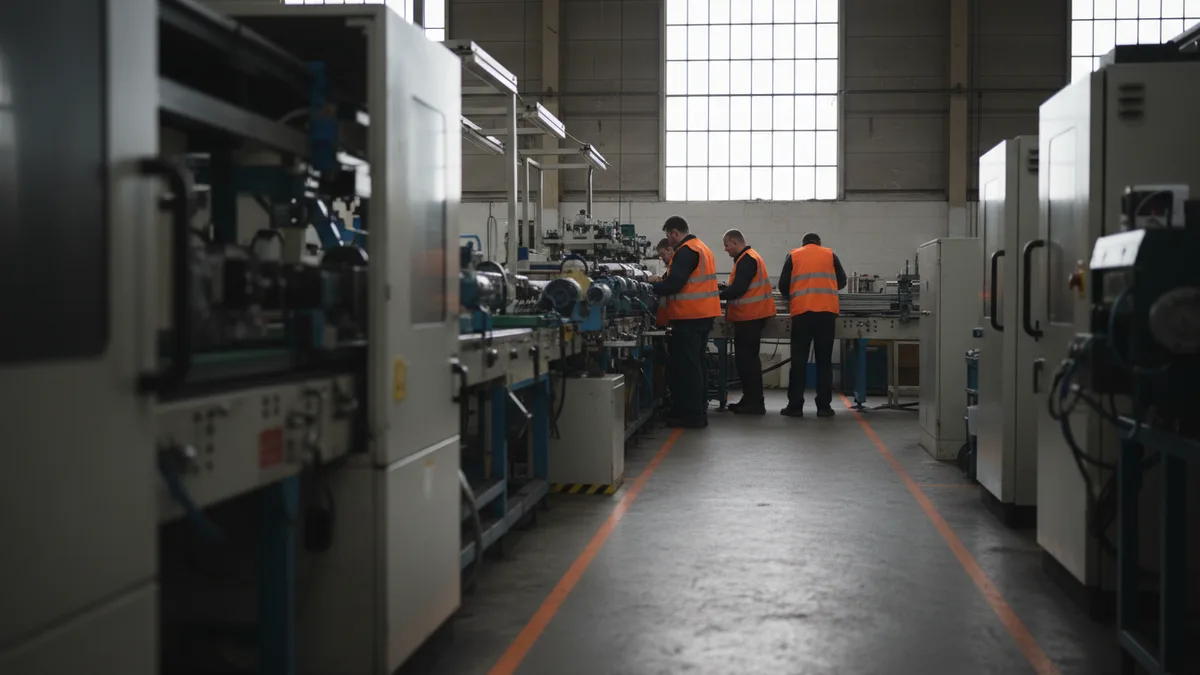
Make More, Waste Less and Stop Losing Margin to a Factory Floor That Runs on Paper and Instinct: Practical AI tools Northern Ireland manufacturers, production managers and operations teams can put to work right now
Northern Ireland manufacturers: practical private AI for production, quality and reporting. Keep your data private and start with one measurable process.
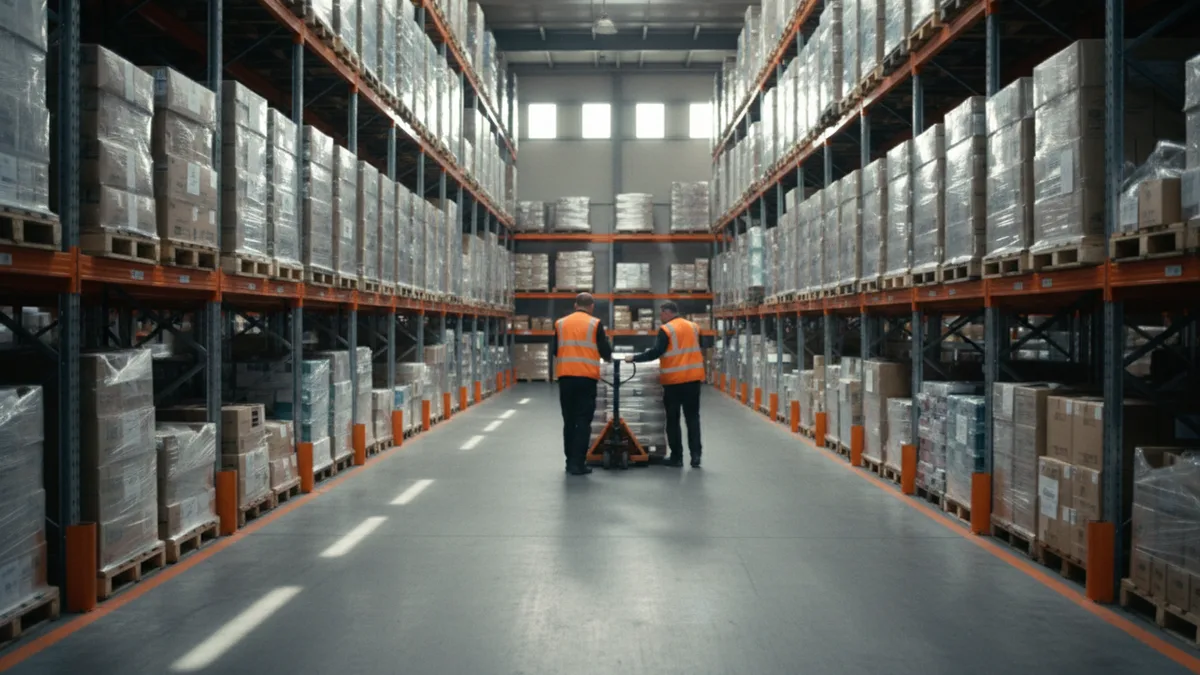
Know What You Have, Know What You Need and Stop Losing Margin to a Warehouse That Runs on Yesterday's Data: Practical AI tools Northern Ireland wholesalers, distribution managers and buying teams can put to work right now
Northern Ireland wholesalers are losing margin to slow ordering, stock errors and disconnected systems. Here is how private AI changes that practically.
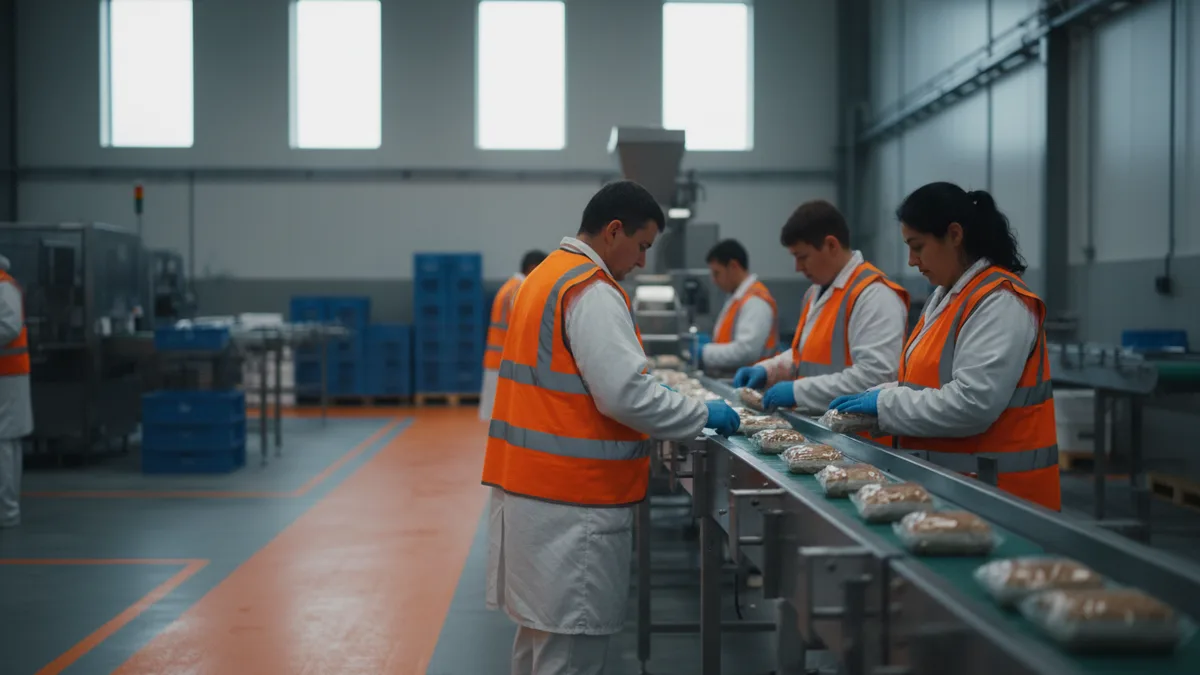
From Field to Invoice, Stop Losing Margin to a Food Business That Runs on Paperwork and Guesswork: Practical AI tools Northern Ireland food producers, processors and agri-food managers can put to work right now
Northern Ireland food and agri-food businesses are losing margin to manual admin, compliance paperwork and disconnected systems. Private AI can change that.