From Field to Invoice, Stop Losing Margin to a Food Business That Runs on Paperwork and Guesswork: Practical AI tools Northern Ireland food producers, processors and agri-food managers can put to work right now
Northern Ireland's food and agri-food sector is one of the most document-heavy, compliance-driven industries in the country. Most of that burden still falls on people with clipboards, spreadsheets and inboxes that never empty.
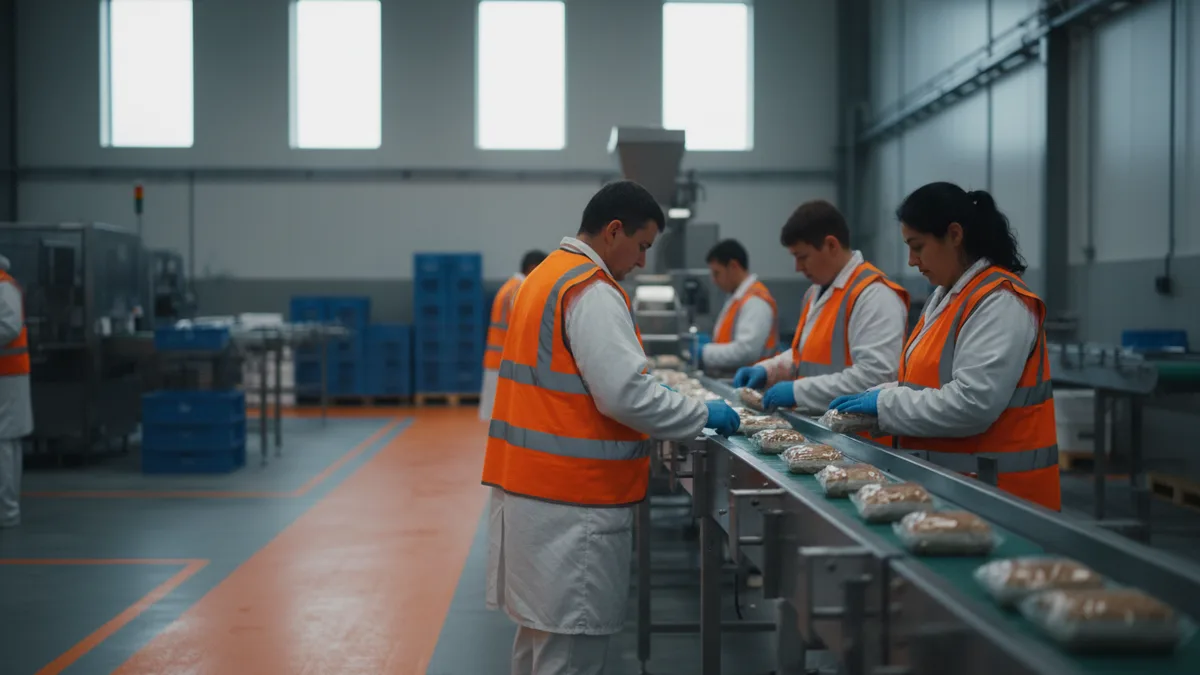
Northern Ireland's food and agri-food sector employs around 100,000 people, turns over more than five billion pounds a year, and keeps some of the country's most recognisable names on supermarket shelves from Ballymena to Berlin. It is also, behind the scenes, one of the most administratively exhausting industries you will find. Batch records, traceability logs, supplier audits, retailer compliance packs, daily production reports, cold chain documentation, customer spec sheets, DAERA returns. The paperwork does not stop when the line stops.
The frustration most production managers and quality leads share is not that the work is difficult. It is that so much of it is the same work, done again and again, by people who could be doing something more useful. A site manager at a Co. Tyrone ready-meal producer once described her week to us as forty percent making food and sixty percent proving she made it properly. That ratio is not unusual. And it is exactly the kind of problem that a well-built private AI system, connected to the data you already have, can start to shift.
Why this matters specifically for Northern Ireland
The agri-food sector here sits in a particular regulatory position that businesses in Great Britain do not face in quite the same way. Post-Brexit trading arrangements mean documentation requirements between Northern Ireland and GB, and between Northern Ireland and the Republic, carry an extra layer of complexity. Certificates of origin, movement documents, customs declarations and sanitary checks all generate paperwork that has to be accurate, consistent and retrievable at short notice.
Add to that the standard demands of major retailer supply: Tesco, Marks and Spencer, Lidl and the rest all run their own audit and compliance programmes with their own document formats and update cycles. A mid-sized processor supplying three or four retail customers can easily be managing half a dozen overlapping compliance frameworks at once. Most of them are doing it with a shared drive, a handful of spreadsheets and one very tired technical manager.
The businesses that will hold their margins over the next three years are the ones that stop treating compliance and administration as a manual overhead and start treating them as something a well-configured system can handle, consistently and without anyone having to chase the same document twice.
Traceability and batch documentation
Traceability is non-negotiable in food. When something goes wrong, you need to know within hours exactly which batch was affected, where the raw material came from, which line it ran on, which customers received it and what the cold chain looked like from intake to despatch. Most businesses can answer those questions. Few can answer them quickly without someone spending an afternoon digging through paper records and ERP exports.
A private AI system connected to your production data, ERP and intake logs can answer a traceability query in seconds. Not by guessing, but by searching and surfacing the actual records you already hold. The same system can flag anomalies automatically: a batch where the recorded cook temperature sits outside spec, a supplier delivery where the intake temperature was borderline, a packing line where yield dropped without a recorded reason.
This is not about replacing your technical team. It is about giving them a tool that does the retrieval work so they can focus on the judgement calls.
Supplier and customer document management
A typical Northern Ireland food processor deals with dozens of suppliers, each sending their own versions of specs, certificates, allergen declarations and audit reports. Those documents arrive by email, through supplier portals, sometimes still by post. They get filed, sometimes correctly, and then someone has to find them again when a customer auditor asks for the current allergen declaration for a particular ingredient at nine in the morning on audit day.
AI-powered document search, running privately inside your own system, changes that completely. You describe what you need in plain language and the system finds it, even if the document is a scanned PDF from three years ago with an inconsistent file name. More usefully, it can monitor expiry dates on certificates and flag upcoming renewals before they become a problem during an audit.
On the customer side, the same principle applies. Retailer spec packs change. New product information forms get updated. A private AI system can compare your current product documentation against the latest customer spec and highlight any gaps, without anyone having to read both documents side by side on a Friday afternoon.
Production reporting and shift handovers
End-of-shift reporting is one of those tasks that gets done because it has to be done, not because anyone enjoys doing it. A line supervisor who has just spent eight hours on a busy production run does not want to spend another forty minutes filling in a report that three people will glance at and file. So the reports get rushed, details get missed, and the production manager starts the next morning with an incomplete picture of what actually happened overnight.
An AI system connected to your production data, your line monitoring and your ERP can draft the shift report automatically, pulling actual figures rather than estimates, flagging anything that fell outside target and formatting it the way your operation expects. The supervisor reviews it, corrects anything the system got wrong, and signs it off. The whole thing takes five minutes instead of forty.
Over time, those reports become a structured dataset. You can start to see patterns: which lines lose the most time on changeovers, which products consistently underperform on yield, which shifts have the most quality holds. That kind of analysis is theoretically available today from most ERP systems. In practice, almost nobody does it because pulling and cleaning the data takes longer than the insight is worth. With the right AI layer on top, it becomes routine.
Demand forecasting and raw material planning
Food businesses live with short shelf lives, seasonal demand swings and customers who change their orders at short notice. Getting raw material buying right is genuinely difficult. Buy too much and you write off perishable stock. Buy too little and you let a customer down, which in a retail supply context can mean a fine or worse.
Most planning in smaller agri-food businesses is still done by experienced buyers who know their customers well and make good calls most of the time. The problem is that their knowledge lives in their heads, not in any system, and it does not scale. When demand patterns shift, or a key buyer leaves, the institutional knowledge walks out with them.
A private AI forecasting model, trained on your own order history, your customer call-off patterns and your production calendar, can give your planning team a solid baseline to work from. It will not replace the buyer who knows that a particular retailer always over-orders in November and cancels half of it in the first week of December. But it will handle the routine forecasting load and flag the unusual patterns so the buyer can focus their attention where it actually matters.
Where to start
The worst thing a food business can do with AI is try to do everything at once. A twelve-month programme to connect every system and automate every process sounds impressive and delivers very little, because the scope creep and the integration complexity eat the budget before anything useful goes live.
The better approach is to pick one process where the pain is real and measurable. For most food businesses we talk to, that process is either document retrieval for audits, shift reporting, or supplier certificate management. All three are high-frequency, low-value tasks that consume skilled people's time and carry genuine risk when they go wrong.
Start there. Get a private AI system running on your own data, inside your own environment, solving that one problem properly. Measure the time saved and the error rate. Then decide what to tackle next. That is how you build something that actually sticks, rather than a pilot that looked good in a demo and never made it to the production floor.
Want to see what this looks like inside your own business?
Book a free 30-minute conversation with Verona AI. We will talk through one specific process where private AI, built on your own data, could make a measurable difference before the end of the year.
Book a free consultationMore from the Verona AI blog

Quote Faster, Claim Smarter and Stop Losing Margin to a Site Office That Runs on Spreadsheets and Memory: Practical AI tools Northern Ireland contractors, estimators and project managers can put to work right now
Northern Ireland contractors are losing margin to slow quotes, missed variations and buried documents. Private AI can change that without exposing your data.

Route Smarter, Document Faster and Stop Losing Margin to a Fleet That Runs on Paperwork and Phone Calls: Practical AI tools Northern Ireland hauliers, fleet managers and transport planners can put to work right now
Northern Ireland hauliers are drowning in paperwork and cross-border admin. Here is how private AI helps logistics businesses cut cost and move faster.
Know Your Stock, Know Your Customers and Stop Losing Margin to a Shop Floor That Runs on Yesterday's Numbers: Practical AI tools Northern Ireland retailers, buying managers and operations teams can put to work right now
Northern Ireland retailers: practical private AI tools to cut stock waste, sharpen buying decisions and protect margin without sharing data with public AI tools.