Route Smarter, Document Faster and Stop Losing Margin to a Fleet That Runs on Paperwork and Phone Calls: Practical AI tools Northern Ireland hauliers, fleet managers and transport planners can put to work right now
Every lorry that leaves your yard generates a trail of paperwork, phone calls and manual checks. Most of that work is repeatable, and most of it can be handled by a system that already knows your routes, your customers and your compliance requirements.
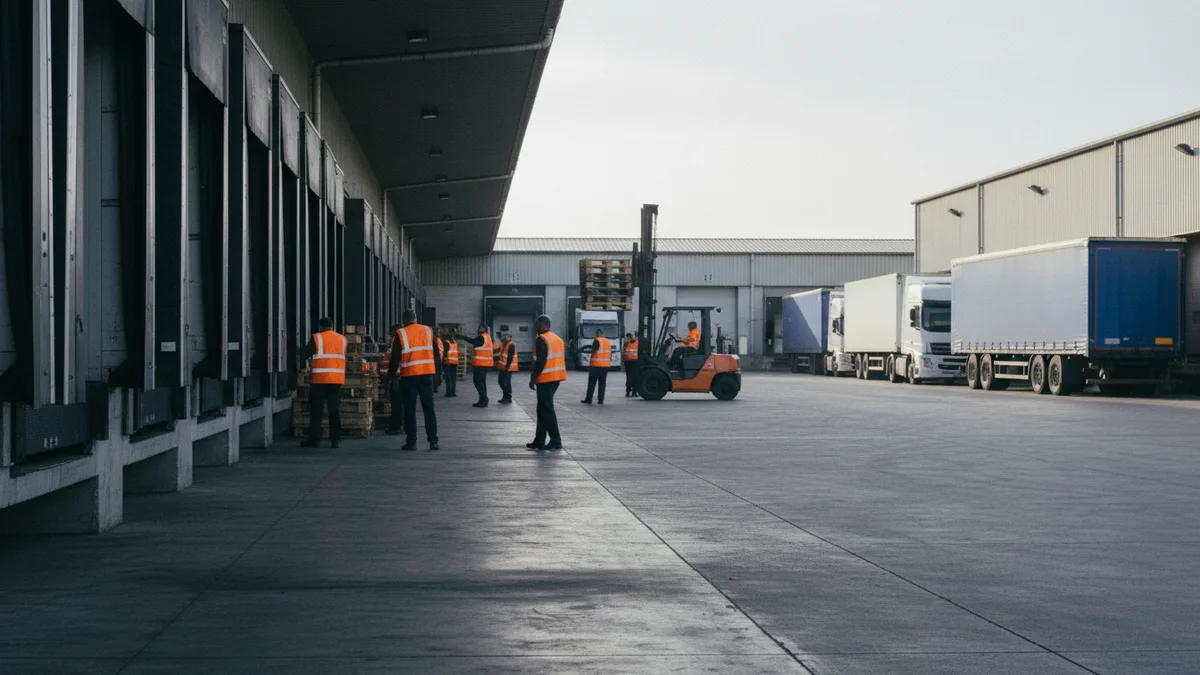
Haulage and logistics is one of those industries where the margin is always tight and the paperwork never stops. A fleet running out of Newry, Londonderry or Mallusk can be shifting hundreds of consignments a week, each one generating delivery notes, proof of delivery, customs declarations, driver hours records, vehicle inspection sheets and customer invoices. Most of that documentation is handled manually, or at best shuffled through a combination of spreadsheets, email inboxes and whatever transport management system was installed a decade ago and never properly integrated with anything else.
The result is a business that moves physical goods efficiently but drowns in the administration that surrounds them. Drivers ring the office to confirm collections. Planners re-key data from one system into another. Accounts chase PODs before they can raise invoices. Compliance managers piece together driver hours from tachograph downloads and handwritten logs. None of it is complicated work, but all of it takes time, and time in transport is money in a way that is hard to argue with.
Why this matters more in Northern Ireland than almost anywhere else
Northern Ireland sits in a genuinely unusual position. Businesses here move goods in three directions: to Great Britain, to the Republic of Ireland and to the rest of the world via both routes. Since the Windsor Framework came into force, the administrative burden on goods moving between Great Britain and Northern Ireland has created a layer of documentation that businesses on the mainland simply do not deal with. Customs commodity codes, sanitary and phytosanitary checks, movement schemes, import control system entries. For a haulier or a manufacturer with its own transport function, that is a significant administrative overhead on top of an already demanding operation.
Add to that the geography. Northern Ireland is a small place with a dispersed population. Loads often travel short distances but involve complex multi-drop sequences, tight delivery windows and customers who expect real-time visibility. The economics of a Belfast-based haulier running a mixed load to Enniskillen, Omagh and Strabane are not the same as a single-drop motorway trunk from a distribution centre in the English Midlands. Every drop adds complexity, and complexity adds admin.
The businesses that will compete best over the next few years are not necessarily the ones with the newest trucks. They are the ones that handle the surrounding administration faster, more accurately and with fewer people having to touch the same piece of paper twice.
Where AI actually fits in a transport and logistics business
The honest answer is that AI does not replace your transport management system, your drivers or your planners. What it does is sit around those things and handle the work that currently falls between them.
Document processing is the most immediate example. A busy haulage operation receives and generates hundreds of documents every week: supplier invoices, customer purchase orders, CMRs, delivery notes, certificates of conformity, customs entries. Most of those documents arrive in inconsistent formats, some as PDFs, some as scanned images, some as email attachments with information buried in the body text. A private AI system can read all of those, extract the relevant fields, match them against your existing records and either process them automatically or flag exceptions for a human to check. That alone can cut the time your admin team spends on document handling by a significant amount, and it removes the transcription errors that creep in when people are re-keying the same information into multiple systems under time pressure.
Knowledge search is another area that delivers results quickly. Transport businesses accumulate a huge amount of institutional knowledge over the years: customer-specific delivery instructions, site access restrictions, contact details for depot managers, rate agreements, special handling requirements. A lot of that lives in someone's head, or in an email thread from two years ago, or in a Word document on a shared drive that nobody can find. A private AI system indexed against all of that can answer a planner's question in seconds rather than requiring a phone call to a colleague who might not be available.
The cross-border document problem and what to do about it
For Northern Ireland logistics businesses, the cross-border documentation burden is the most pressing place to start. The volume of paperwork associated with goods moving under the Windsor Framework is not going away, and the businesses that handle it manually are spending real money on something that a well-configured AI system can largely automate.
A private AI platform connected to your customs software, your ERP and your email can monitor incoming shipment notifications, extract the commodity and consignment data, check it against your movement scheme eligibility and either complete the required entries or flag the ones that need human review. It can also maintain a searchable record of every declaration made, every exception raised and every inspection outcome, which is exactly what you need when DAERA or HMRC come asking questions.
The critical point is that this works because the AI is running inside your business, connected to your systems and trained on your data. It is not a public chatbot guessing at commodity codes. It knows your product range, your regular customers and your typical routes, because it has been built on the records you already have.
Automated reporting and the visibility problem
One of the most common complaints from transport managers is that they spend too much of their week pulling together reports that should just exist. Fleet utilisation by vehicle. On-time delivery performance by customer. Driver hours compliance across the week. Fuel consumption against planned routes. Cost per tonne per kilometre. All of that data exists somewhere in the business, but getting it into a single coherent picture usually involves exporting from one system, manipulating a spreadsheet and sending an email that is out of date before it arrives.
A private AI system connected to your TMS, your tachograph data, your fuel cards and your customer invoicing can produce those reports automatically, on whatever schedule you need, in whatever format your customers or your board require. More usefully, it can be configured to flag anomalies as they happen rather than waiting for the weekly review. If a particular vehicle is running significantly over its planned fuel consumption, or if a driver is approaching their hours limit with two drops still to complete, the system can surface that in real time rather than after the fact.
For businesses that report to retail or food-sector customers with strict KPI requirements, this kind of automated reporting removes a significant administrative burden and reduces the risk of missing a contractual obligation because someone forgot to pull the numbers.
Why this matters for Northern Ireland specifically: the talent angle
There is a practical reality in Northern Ireland logistics that does not always get talked about plainly. Finding and keeping good office staff, particularly people with the combination of transport knowledge and administrative discipline that a busy haulage operation needs, is genuinely difficult. Wages have risen, the pool of experienced people is not large and the work itself, processing the same documents and answering the same queries day after day, is not what most people want to spend their careers doing.
AI does not solve a recruitment problem, but it does change the nature of the work. If your admin team is spending four hours a day processing PODs and re-keying delivery data, and a private AI system handles most of that, those four hours go somewhere more productive. That might mean the same team handles a higher volume of work. It might mean one fewer hire when someone leaves. It might mean the people you have can focus on the customer relationships and exception handling that actually require human judgement.
The businesses in this sector that are talking to Verona are not doing so because they want to automate for automation's sake. They are doing it because the admin load is growing faster than the team, and the margin does not stretch to simply hiring more people to process more paper.
Where to start
The most sensible starting point for a logistics or transport business is a single, well-defined process with a clear before-and-after measure. POD processing and invoice matching is the most common choice, because the volume is high, the current cost in staff time is easy to calculate and the improvement is visible within weeks rather than months. Cross-border document handling is the right starting point for businesses where that is the dominant pain.
Verona's AI Discovery process maps the specific processes in your business, connects to the systems you already have and produces a costed, ranked plan showing which applications will deliver the most value and in what order. Nothing is built on guesswork, and nothing goes anywhere near a public AI tool. Your customer data, your rate agreements, your operational records all stay inside your own environment.
The businesses that will look back on this period and feel good about the decisions they made are the ones that picked one real problem, measured it properly and built from there. That is a much more achievable starting point than it might sound.
Want to see what private AI could do for your fleet?
Book a free 30-minute conversation with Verona AI. We will talk through the specific processes in your business and show you how a private AI system, built on your own data, could cut the admin and sharpen the margins.
Book a free consultationMore from the Verona AI blog
Know Your Stock, Know Your Customers and Stop Losing Margin to a Shop Floor That Runs on Yesterday's Numbers: Practical AI tools Northern Ireland retailers, buying managers and operations teams can put to work right now
Northern Ireland retailers: practical private AI tools to cut stock waste, sharpen buying decisions and protect margin without sharing data with public AI tools.

Fill More Rooms, Waste Less Food and Stop Losing Margin to a Business That Runs on Gut Feel: Practical AI tools Northern Ireland hotel owners, restaurant operators and hospitality managers can put to work right now
Discover how private AI helps Northern Ireland hotels and restaurants cut food waste, improve pricing and automate admin without sharing data with public tools.

Record Less, Care More and Stop Losing Capacity to Admin That Was Never a Good Use of Anyones Time: Practical AI tools Northern Ireland care providers, registered managers and social care teams can put to work right now
Northern Ireland care providers are drowning in admin. See how private AI built on your own data can cut paperwork and free up care capacity fast.