Fill More Rooms, Waste Less Food and Stop Losing Margin to a Business That Runs on Gut Feel: Practical AI tools Northern Ireland hotel owners, restaurant operators and hospitality managers can put to work right now
Hospitality runs on thin margins and thick paperwork. For most Northern Ireland operators, the data to run things better already exists. It just lives in six different places and nobody has time to look at it.
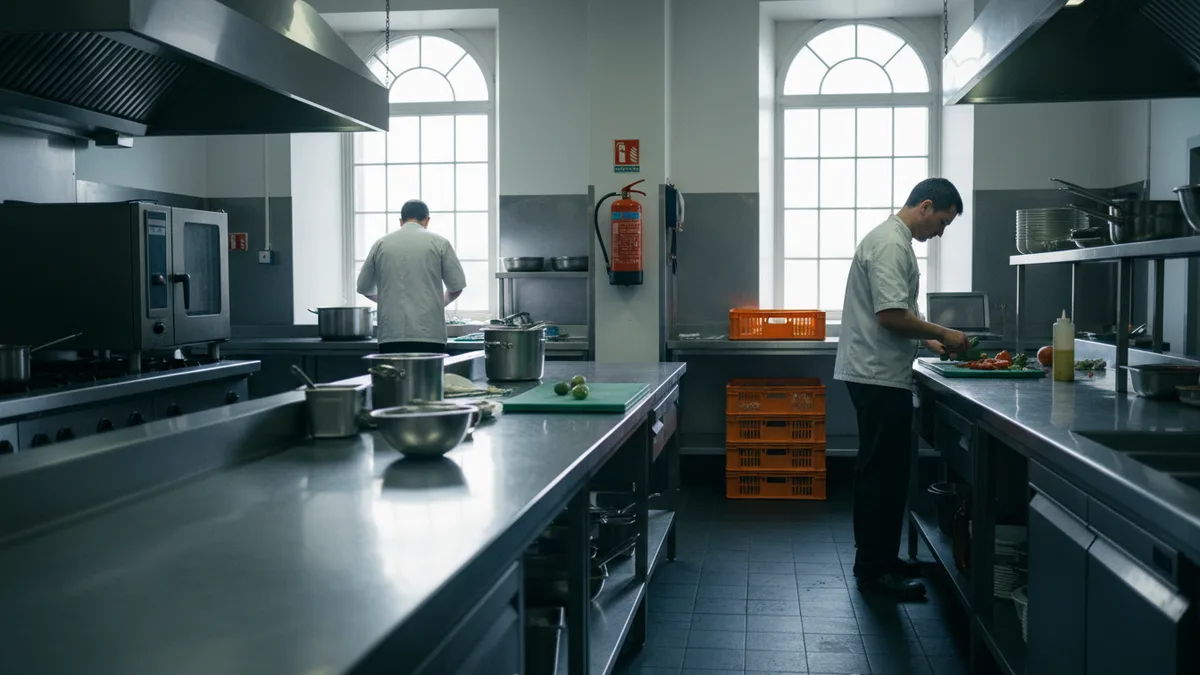
Running a hotel, restaurant or catering operation in Northern Ireland in 2026 is not for the faint-hearted. Energy costs have not come back down the way people hoped. Wage bills keep climbing. Customers are more price-conscious than they were two years ago, and online review platforms mean a bad Saturday night follows you into Monday morning. The margin for error, always thin in hospitality, has got thinner still.
What makes it harder is that most operators are drowning in data they cannot actually use. The property management system holds booking history. The EPOS holds sales by cover and by dish. The supplier invoices sit in an inbox or a lever arch file. The rota is on a spreadsheet somebody built in 2019. The allergen register is a laminated sheet behind the pass. None of it talks to anything else, and the manager who could join it all up is already doing three other jobs. That is the problem private AI is built to solve.
What is actually eating your margin
Ask most hospitality owners where the money goes and they will say staffing, food cost and energy, in that order. They are right. But ask them which shifts are consistently overstaffed, which dishes have the worst actual gross profit once waste is counted, or which room types are being discounted on nights when they did not need to be, and the answer is usually a shrug. Not because the owner is not sharp. Because the data is locked in systems that do not talk to each other and nobody has the hours to pull it apart manually.
Food cost is a good example. A mid-sized hotel kitchen in somewhere like Newry or Ballymena might spend sixty or seventy thousand pounds a month on food purchasing. Even a two percent reduction in waste and over-ordering is worth well over ten thousand pounds a year. The data to find that two percent is sitting in the purchasing system, the stock sheets and the till. It just needs something to read it all together and flag the patterns.
Staffing is the same story. A rota built on last week's bookings and the manager's memory of busy periods will never be as accurate as one built on three years of actual covers, event calendars, school holidays and local factors. The gap between those two approaches shows up every week in either wage cost or service quality, sometimes both.
Why this matters especially for Northern Ireland
Northern Ireland hospitality has a few pressures that are specific to here. The visitor economy has grown steadily, driven by everything from the Causeway Coast to the growth in Belfast as a short-break destination, but it is still heavily seasonal and sensitive to external events in a way that somewhere like Edinburgh is not. An operator in Portrush or Enniskillen needs to manage a very compressed peak season and a quieter shoulder period, and the difference between getting that right and getting it wrong is often the difference between a profitable year and a difficult one.
Cross-border trade adds another layer. Food and beverage purchasing decisions that cross the border involve currency exposure and supplier lead times that change. An agri-food supplier in Monaghan, a linen supplier in Dundalk, a spirits wholesaler in Dublin. The purchasing manager who is tracking that manually, watching exchange rates on a phone while trying to do three other things, is working harder than they should have to.
Then there is the labour market. Hospitality in Northern Ireland has had real difficulty retaining experienced staff since 2021. That means the institutional knowledge that used to live in a long-serving head chef or a front office manager who had been there fifteen years is now turning over faster. Private AI that captures and organises operational knowledge, standard recipes, supplier contacts, pricing history, compliance records, does not replace those people, but it does mean the business does not start from scratch every time someone leaves.
Where AI actually fits in a hospitality operation
The applications that tend to deliver the clearest return in hospitality are not the flashy ones. They are the unglamorous, repeatable processes that eat manager time every single week.
Demand forecasting and purchasing is the obvious starting point. A private AI system connected to your booking data, your EPOS history and your supplier pricing can produce a weekly purchase plan that is grounded in what you are actually likely to sell, not what you sold the same week last year plus a gut-feel percentage. For a kitchen spending serious money on fresh produce, the reduction in over-ordering and waste can be significant within the first few months.
Automated reporting is another one. Most hospitality managers spend two or three hours a week pulling together figures that already exist in the systems. Revenue per available room, labour cost as a percentage of revenue, food cost percentage by outlet, cover numbers against forecast. A private AI system can pull those figures together automatically, present them in a format the owner or GM actually wants to read, and flag anything that has moved outside the normal range. That is time given back to the business every single week.
Document and knowledge search matters too, particularly for compliance. Allergen management, food safety records, licensing conditions, HMRC VAT returns for mixed-rate hospitality businesses. These are areas where getting it wrong has real consequences. A system that can search across your own records and surface the right document quickly is worth having, and it does not require your compliance data to pass through any public AI tool.
The privacy point is not a small one
Hospitality businesses hold a lot of sensitive data. Customer booking histories, dietary requirements, corporate account details, staff personal records, financial performance by outlet. The idea of feeding any of that into a public AI chatbot to get a quick answer should make any responsible operator uncomfortable, and not just for GDPR reasons.
When Verona builds an AI system for a hospitality business, it runs inside that business, on the operator's own infrastructure or a private cloud environment they control. The booking data from your property management system, the sales history from your EPOS, the purchasing records from your accounts package: all of it stays where it belongs. It is used to make your operation smarter. It is not used to train a model that benefits someone else, and it does not sit on a shared platform where another operator could, even accidentally, get access to your commercial information.
For a group operator with multiple sites across Northern Ireland, this matters even more. The consolidated view of performance across sites, the ability to compare like for like and spot where one kitchen is outperforming another on food cost, that is genuinely valuable commercial intelligence. It should stay inside the business.
Where to start
The mistake most operators make when they think about AI is imagining they need to do everything at once. A full digital transformation programme, new systems, new processes, a big capital commitment. That is not how Verona works and it is not what most businesses need.
The right starting point is usually one process where the problem is clear, the data already exists and the return can be measured. For a hotel with a food and beverage operation, that is often purchasing and waste reduction. For a restaurant group, it might be automated weekly reporting so the owner actually knows how each site performed without spending Sunday morning pulling it together manually. For a contract caterer, it might be demand forecasting for a large account where over-production is costing money every week.
Verona starts every engagement with an AI Discovery, a structured audit that looks at the systems you already have, the data they hold and the processes that are costing you most. The output is a costed, ranked plan. You can see exactly what the first application would do, what it would connect to, what it would cost and what a realistic return looks like before any implementation work begins. There is no obligation to go further, and the plan itself is useful regardless.
If you are running a hotel, restaurant or hospitality business in Northern Ireland and you are tired of making decisions based on incomplete information and too little time, the conversation is worth having.
Could your hospitality business run on something better than gut feel?
Book a free 30-minute conversation with Verona AI. We will show you how a private AI system built on your own bookings, purchasing and operational data could cut waste, sharpen pricing and give your managers their time back.
Book a free consultationMore from the Verona AI blog

Record Less, Care More and Stop Losing Capacity to Admin That Was Never a Good Use of Anyones Time: Practical AI tools Northern Ireland care providers, registered managers and social care teams can put to work right now
Northern Ireland care providers are drowning in admin. See how private AI built on your own data can cut paperwork and free up care capacity fast.

Charge More, Write Less and Stop Losing Fees to Admin That Eats Half Your Working Week: Practical AI tools Northern Ireland accountants, practice managers and finance teams can put to work right now
Northern Ireland accountants are losing billable time to repeatable admin. Private AI can change that without putting client data at risk. Here is how.
Plan Better, Waste Less and Stop Losing Margin to a Factory Floor That Runs on Instinct: Practical AI tools Northern Ireland manufacturers, production planners and operations managers can put to work right now
Northern Ireland manufacturers are losing margin to poor planning and disconnected data. Here is how private AI fixes that without exposing your data.