The AI That Gave a Grandmother Her Grandson's Face Back: A real-world story about artificial intelligence restoring sight, and what it tells us about technology used with genuine purpose
Somewhere in rural Australia, a grandmother who had not recognised a face in three years looked at her grandson and smiled. This is the story of how that happened, and why it gives us real reason to feel good about where AI is heading.
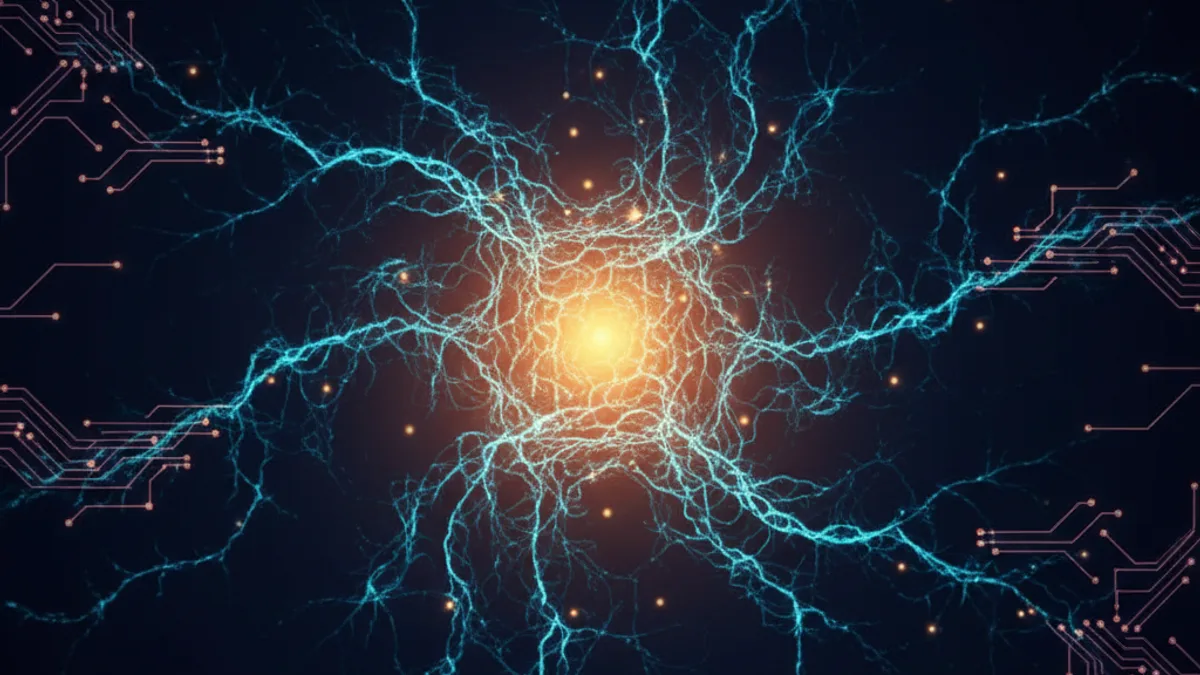
It is easy to read about artificial intelligence and feel a low-level hum of anxiety. Jobs, data, deepfakes, algorithmic bias. The concerns are real and they deserve serious attention. But every so often a story surfaces that cuts through all of that, and this is one of those stories. Researchers and engineers working on a project called the Bionic Vision System, developed in partnership between Monash University in Melbourne and a team of neuro-engineers in the United States, have spent the better part of a decade working on a single question: can AI help a brain that has lost its connection to the eyes learn to see again? In 2025, the answer started looking like yes.
The system does not restore sight in the way most of us imagine it. There is no surgical repair of a damaged retina. Instead, a small camera mounted on a pair of glasses captures the world in real time. An AI model processes that visual information at extraordinary speed, stripping it down to the most essential signals, the edges of a doorframe, the outline of a face, the movement of a hand. Those signals are then sent wirelessly to a tiny implant sitting on the surface of the brain itself, which stimulates the visual cortex directly. The result is not HD vision. It is more like a rough pencil sketch of the world. But for people who have lived in complete darkness for years, that sketch is everything.
What the AI actually does, in plain terms
The clever part, and the part that keeps improving, is the AI processing layer in the middle. Early versions of the system were relatively blunt. They sent raw pixel data to the brain implant and hoped the brain would make sense of it. The brain, being the remarkable thing it is, sometimes did. But the experience was patchy and exhausting for users. Modern versions use a trained neural network that has learned, across thousands of hours of visual data, which features of a scene matter most to human perception.
Think of it like this. If you are trying to recognise your grandson across a kitchen table, the angle of light on the wall behind him is irrelevant. The shape of his hairline, the set of his shoulders, the way he tilts his head when he laughs, those things matter enormously. The AI has learned to prioritise exactly those signals, and to discard the noise. The result is a cleaner, more useful picture delivered to the brain, and users report that recognition tasks, faces, doors, steps, moving vehicles, have become dramatically more reliable over the past two years of trials.
The grandmother in the story, whose name has not been shared publicly at her family's request, had lost her sight to a degenerative condition in her early seventies. She was one of four participants in an expanded Australian trial. After several weeks of calibration, during which the AI model was fine-tuned to her specific neural responses, she was able to identify her grandson walking into the room. The research team described her reaction simply. She reached out and touched his face.
This is not a one-off experiment
It would be easy to file this under 'remarkable but distant'. A university lab, a handful of participants, years away from any kind of scale. But that framing is becoming less accurate. Orion, a separate system developed by Second Sight Medical Products in California, has already received regulatory clearance in the United States and is in active clinical use. Microsoft's Seeing AI app, which uses a smartphone camera and AI to narrate the world for visually impaired users, has been downloaded millions of times globally and costs nothing. It tells you the denomination of a banknote, reads a handwritten note aloud, describes the expression on a person's face.
These are not prototypes. They are tools that people are using today, on ordinary Tuesdays, to get through ordinary life with a little more independence. The Monash work represents the more ambitious end of the spectrum, but the direction of travel across all of it is consistent. AI is getting better at bridging the gap between the world as it is and the world as someone with a sensory impairment can access it. And it is doing so faster than most people realise.
Why this matters for Northern Ireland
Northern Ireland has around 46,000 people living with sight loss, according to figures from RNIB Northern Ireland. That number is expected to rise significantly as the population ages, and conditions like diabetic retinopathy, which is closely linked to the rising prevalence of Type 2 diabetes, become more common. The Belfast Health and Social Care Trust, the Western Trust covering Derry and Strabane, and community optometry services across the region are all under real pressure to do more with stretched resources.
Assistive AI tools, the accessible, affordable end of this spectrum, are already available and largely not being promoted to the people who need them most. Seeing AI works on any modern iPhone. Be My Eyes, another free app, connects visually impaired users with sighted volunteers or an AI assistant for real-time help reading labels, menus, and instructions. JAWS, the long-established screen reader, now integrates AI-powered image description. None of these require a hospital referral or a special device. A community worker in Ballymena, a social prescribing coordinator in Newry, a GP receptionist in Omagh, any of them could mention these tools to a patient or client today.
There is also a broader point here about how Northern Ireland thinks about AI adoption. The conversation in most organisations is still framed around efficiency and cost. That is a legitimate framing. But this story is a reminder that AI also has a human dimension, and that some of its most meaningful applications are not about saving money but about giving people something back.
The researchers who made it happen
It is worth pausing to acknowledge the people behind this work, because AI does not build itself. The Monash team is led by Professor Arthur Lowery, an electrical engineer who has spent thirty years working on neural interfaces. His collaborators include neuroscientists, ophthalmologists, materials engineers, and software developers. The AI models at the heart of the system were trained not by a tech giant with a commercial product to sell but by a university research group motivated, in their own words, by the question of what it would mean to give someone their world back.
That kind of motivation produces different decisions than commercial pressure does. The team has published its core findings openly. It has shared training data with other research groups. It has actively sought out participants from communities that are often excluded from clinical trials, including older women, people from rural areas, and people with multiple conditions. The result is a system that has been shaped by a wider range of human experience than most tech products ever encounter.
Where to start if you work in care, health or community services
If you work anywhere near health, social care, community support or disability services in Northern Ireland, there are a few genuinely simple things worth doing this week. First, download Seeing AI and Be My Eyes on your own phone and spend ten minutes with them. You cannot recommend something you have never tried. Second, check whether your organisation has an accessibility policy that mentions AI tools, and if it does not, raise the question. Third, have a look at what RNIB Northern Ireland is currently recommending to clients, because their guidance is updated regularly and is far more current than most clinical training materials.
None of this requires a budget or a project plan. It requires curiosity and a willingness to pass on something useful. The gap between a transformative technology existing and the people who need it most actually knowing about it is almost always a human gap, not a technical one. Closing that gap is something any of us can do, regardless of our job title or our familiarity with AI.
A thought to carry into the weekend
There is a version of the AI story that is all disruption and displacement and existential risk. That version has genuine substance and it deserves engagement. But it is not the only version. There is also the version where a team of engineers and scientists spends a decade on a problem not because it will make them rich but because they want a grandmother to see her grandson's face. Both versions are true at the same time.
What we choose to build, and who we choose to build it for, is still a human decision. The technology is a tool. The values are ours. On a Friday at the end of July, with the summer properly underway and the Mournes looking their best, that feels like a decent thing to hold onto.
At Verona AI, we spend most of our time on the practical and commercial side of this, helping Northern Ireland businesses find real uses for AI that save time and improve results. But we think about the human dimension too. If you are working on something that uses AI for good, in whatever form that takes, we would genuinely love to hear about it.
Curious what AI could do for your organisation?
At Verona AI in Northern Ireland, we love finding practical, people-first uses for this technology. Drop us a message for a free, no-pressure conversation about where AI might genuinely help you.
Book a free consultationMore from the Verona AI blog

Close the Books Faster, Spot Problems Earlier, Charge What You Are Worth: Practical AI tools Northern Ireland accountants, finance managers and bookkeepers can put to work right now
Discover practical AI tools Northern Ireland accountants and finance teams can use today to save time, cut errors and serve clients better. Free consultation.

Grow Smarter, Cut Waste, Get Paid Fairly: Practical AI tools Northern Ireland farmers, agri-food producers and rural business owners can put to work right now
Discover practical AI tools Northern Ireland farmers and agri-food producers can use today to cut costs, reduce waste and improve yields. No hype, just results.
Fill More Rooms, Waste Less Food, Keep Guests Coming Back: Practical AI tools Northern Ireland hotel managers, restaurant owners and tourism operators can put to work right now
Discover practical AI tools for Northern Ireland hospitality businesses. Fill more rooms, cut food waste and improve guest experience without a tech degree.